
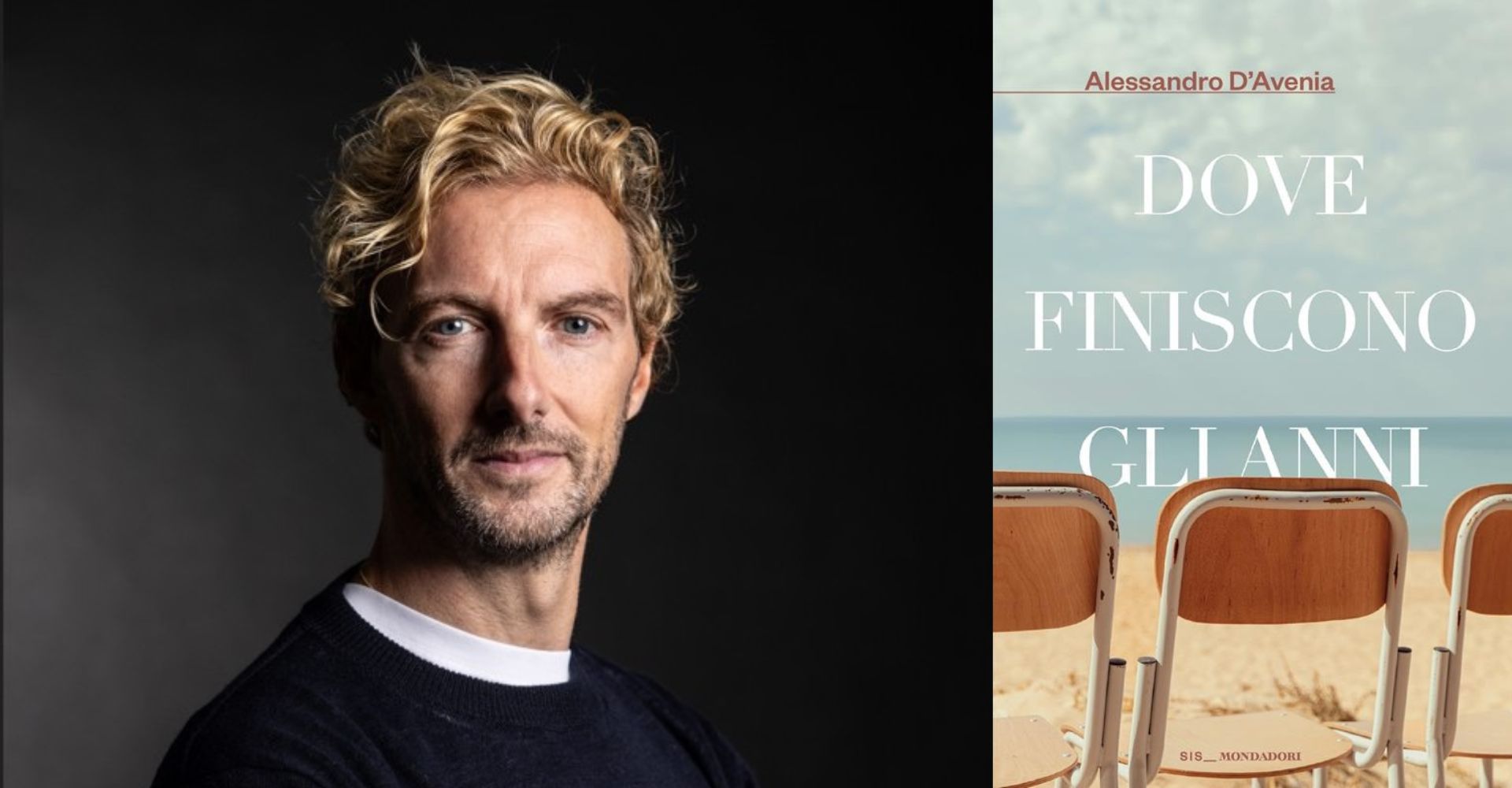
First. Then. The chapters of the new book by Alessandro D’Avenia alternate like this, forcing readers to ask themselves what they have done with the time of their lives. The writer, a high school literature teacher beloved by readers of all ages, returns to talk about the adolescent age—his young protagonists are well known, after all, from Bianca like Milk and Red as Blood, the 2010 bestseller with which D’Avenia launched his career and from which a film was made—yet this time he does so by alternating the past and the future of Leone, the protagonist of his new novel, whom we meet at 17, in the analog 1990s, and then at 37, the digital years of the new millennium.
“From adolescence you live by restlessness, from adulthood by habit”
“The word that describes the young protagonist is hunger, which characterizes not only adolescence but also the inner life of any individual, a healthy hunger that pushes us to grow,” explains D’Avenia, whom we met.
And this is precisely how the novel begins: “He is hungry.” “The problem of the adult Leone is that he has lost this ‘hunger’,” the author continues: “In adolescence you live by restlessness, in adulthood by habit.” While the adolescent is searching for his form, the adult, who thinks he has found it in accepted roles and masks, settles, ceasing to grow.

That is how young Leone Pardi “navigates by sight” through his restlessness: he is in his fourth year of high school, the year in which the thrill of the novelty of the first years has already vanished and maturity is still far away to worry about.
But there is one element upon which he projects his hunger for living: the young man is fascinated by the graffiti on the walls of the school bathrooms, which he catalogues with a fervor almost philological, because “the passions and troubles of his fellow prisoners contain more truth than what is dispensed in class by aging teachers.”
From the graffiti on the walls to the mystery…
It will be one of these inscriptions that gives life to a genuine mystery, whose clues are followed by the boy, who takes on the role of a somewhat “Don Quixote-like” detective, who, by refusing to accept reality, ends up entangled in it, because this is what growing up means.
Before him opens a dual mystery: first, to discover what happened to a female classmate, but not only that; the pursuit will lead him to face his greatest fear: that of becoming an adult in a world of disenchanted, if not cynical, grown-ups.
Is there a way to grow without betraying oneself?
“The adult, once the restlessness is resolved with a series of roles codified by the world, is convinced he has arrived, and must move forward on that path to the end,” the author explains, continuing: “But that doesn’t work, because time continually unravels the forms we cling to in order not to face thevoid that would open up by admitting that life cannot be all here. In fact, even when you think you’ve “made it,” pain arrives to dismantle everything, or boredom tells you that life is missing from life. That is why the adolescent cannot stand boredom and turns it into action, rebellion, creativity; the adult, instead, accepts it for quiet living, now sure of what he has, but thereby loses his ‘hunger,’ i.e. he stops growing.
That is why there is the “before” and the “after”: the author links the young Leone with the adult Leone, precisely through the graffiti in the bathrooms, and in doing so finds a way “to rediscover that hunger, and to discover what nourishes it,” in an attempt to solve the mystery in which he is involved.
The group of “Human Cases”
But the adolescent will not be alone: accompanying him is the group of the “Human Cases”: Levi-Montalcini, who, as the name suggests, is the school’s brightest girl; there’s then Mercury, a troublemaker with a skateboard forever at his side; finally Spinoza, whose modest appearance hides surprising resources.
At the heart of his undertaking are words, which will guide him in his search. Not only the words carved and scribbled on the walls of the bathrooms, but also those found in books.
Leone really likes words, so much that he enjoys creating new ones, pairing seemingly distant terms to give life to concepts and emotions that would otherwise never be touched or explored.
The school year passes thus, with the double parallel investigation.
Leone will find a way to explore himself and the world, but then all he will obtain will be pulled away from him once he becomes an adult, when conformism and time that passes prevail, causing him to abandon the path of inquiry, the hunger for truth, beauty, and justice. That hunger that is leading many youths today to rebel against forms that instead of letting life flourish suppress it.
Shake off conformity
“The word conformity means that you, at the moment you seek your form, let the world tell you what it should be,” the author comments, elaborating: “I always ask my students what is the thing that hurts them most in that moment. That is the life wanting to heal, the symptom is life wanting to heal. That pain is precisely the desire to shake off a form that isn’t yours, conformity, if not even the uniform, that you wear when you start doing what everyone else does just to be somebody, like the ones worn by those who destroyed and looted Milan a few days ago, actions they could not wait to post. The adolescent’s creativity, if it has no space, turns into its opposite: destruction. He who destroys has not found himself, and anger is the way of not facing directly one’s own void, at any age.”

Here then returns that “hunger” mentioned earlier, the same one that opens the novel: “To be able to shake off conformity you must keep that very ‘hunger’ alive, rebel against all the forms the world wants to impose on you, and discover the path to true freedom that is to discover what we are irreplaceable in.”
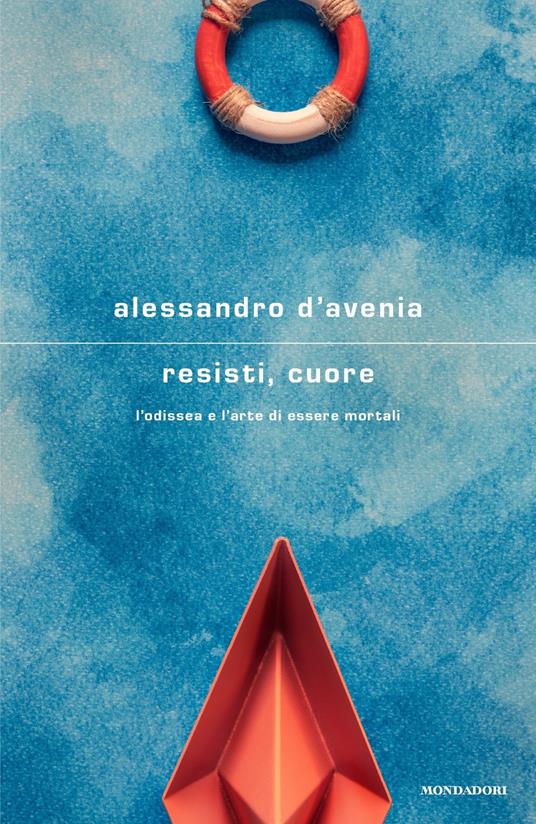
“The novelty of our era is that you can have a deep pain and not feel it anymore, burying it under layers of distraction and amusement, putting life’s appointment off,” the writer argues, a while after having authored Resist, Heart – The Odyssey and the Art of Being Mortal.
“You always have something that distracts you, gives you emotions that make it seem like everything is going well. But inside you are dying. I tell my students: try ten minutes of silence without music, without a phone, without anything. At the third minute you’ll have a breathing crisis. At the fifth minute, if you have persisted, you are facing the truth. At the seventh minute you begin to think about the form only you could have, but who has the courage to confront this void?”
Seasons of life that outwardly seem distant
Beginning from the experience of adolescence, shapeless and adventurous, the novel unfolds toward the time of stable, repetitive routine, but no less restless, of adulthood: seasons of life that appear distant, yet can be held together precisely by that hunger, by that search for a life worth living. Why did Leone betray himself? How do we not betray ourselves? The novel seeks not a lost time nostalgically recovered, but a time that was missed, which can occur at any age of life.
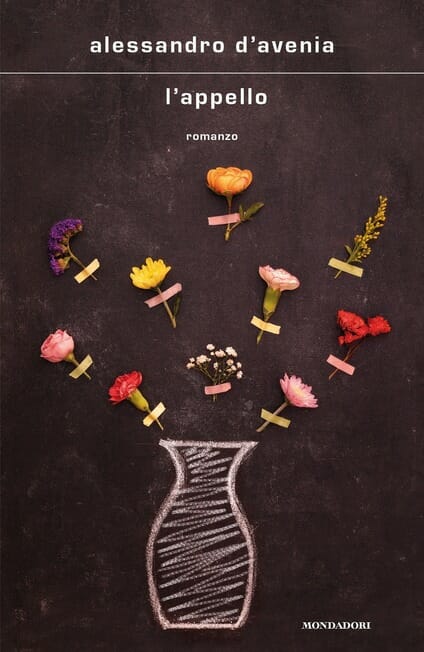
And, if young people must be allowed to explore themselves, D’Avenia—who, as noted, has direct daily experience with this age—also suggests how to give space to the younger ones, and let them express themselves: “The moment of the call is the most important. Usually we only notice the absent one, because you must mark him in the register. The real revolution lies in caring about those who are present. Look them in the eyes, ask them something. We lose 20–30 seconds per person, but we gain them back in communication: make your students understand that their life is important. Everything else follows, because only someone who feels loved can then face life with courage, and not spend time nursing wounds or turning emptiness into anger.”
