
While studying neurodivergences to write my series on Atena Ferraris (a character who is autistic and ADHD), I discovered that several luminaries in the field almost certainly believe that Lewis Carroll today would have a level-one autism diagnosis (the one also known as “high-functioning” — ugh, what a cold term — and which, more or less, with some differences, would fall under the definition of Asperger’s syndrome, which is no longer used today).
The Need for Identification
It happened to me once, when I was talking about Lewis Carroll, that several people became very interested.
In fact, this topic of retrodiagnosis of neurodivergence in historical or literary figures is a fascinating field: to understand, it is when the neurodivergent community looks for its members among biographies of historical figures, or within the pages of novels.
There are those who approach it almost as a game, others with rigorous scientific research (especially when it concerns historical figures). At the base, however, there are always the same two things: a need and a conviction.
1) The need: to see oneself represented. Not having to settle for “things that come close.” Think about literature: one of the greatest strengths of books is that they don’t make you feel alone, right? There’s always a book, somewhere, that shows you you’re not the first and you won’t be the last to live a certain human situation… or at least you hope there is one, at least one, that is perfect for you;
2) The conviction: that neurodivergences have always existed. And that’s precisely true. They did not just appear now. Now, perhaps, they have a name, they’re recognized more clearly, etc. And therefore, if autistic people or ADHD have always existed, there must be traces of them in History (with a capital H), and in stories (plural), since narrative reflects humanity.
Is it Right to Retrodiagnose Historical Characters?
Now: you should know that this practice is highly debated. It isn’t something you can do with a light heart. People look at you askance, as if you were appropriating something unjustly.
But I must tell you, the more I think about it, the more I become convinced that there is nothing wrong with it.
I try above all to explain why it is controversial. As far as retrodiagnosing historical figures goes, okay, it’s fairly obvious: “They were real, complex people, and you didn’t know them; you rely on limited biographical knowledge to say, for example, that Leonardo was ADHD or Isaac Newton autistic, and that’s as delicate as diagnosing the same in your child’s classmate or your coworker.”
Indeed. In fact, as I mentioned, retrodiagnoses on historical figures are rightly those conducted with the utmost scientific rigor, and are usually not offered as facts, but with the cautions of conditionals: “Perhaps it could be that.”
“We Should Not Put Words in the Mouth of Past Authors About Things They Did Not Mean to Say!”
The arguments against diagnosing the protagonists of books, however, are somewhat different. The most cited is: “We should not put words in the mouths of past authors about things they did not mean to say! Jane Austen with Mr. Darcy certainly did not intend to describe an autistic person!”
But here the answer is: no, indeed, and who would want to argue in favor of such a thing?!
Of course Austen did not intend to describe “an autistic person.” She didn’t even know what it meant to be autistic: it’s perfectly clear to everyone. Austen wanted to describe a person. And it happens that, by assembling the character of that person from her own observation of humanity (as all novelists do), she chose traits that we today recognize as potentially neurodivergent. But simply because they were already part of the repertoire, the basket from which she could draw.
The equation is simple: literature draws from humanity; neurodivergences have always been part of humanity; neurodivergences end up being portrayed by literature.
Without “forcing” it. Simply because they have always been there.
Even Neurotypicals Read Novels to Find What Interests Them
That’s what the critics sometimes miss. The call for caution is wise — we’re dealing with scientific and important topics — but sometimes it’s not just about that: you read between the lines and you see a matrix of prevention and prejudice. Those who rake retrodiagnoses over the coals are sometimes driven by the belief that talking about neurodivergences is a tiresome trend, that neurodivergent people try to appropriate everything that is humanly interesting, that the only interest of neurodivergent people is neurodivergence and that they reread the past solely to see what they want to see, not what history or authors intended to say.
Well, scoop: even neurotypicals read novels to find what interests them. And you know what? Not only is it possible, not only do we all do it, but it isn’t even a crime: that’s basically how it works.
Examples? When you write a class essay on Pride and Prejudice, you know very well (both neurotypical and neurodivergent) that there are fundamental things to note about the social and historical context, the status of women, Jane Austen’s style and technique. These things aren’t denied by anyone.
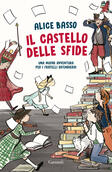
Il castello delle sfide
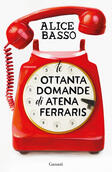
Le ottanta domande di Atena Ferraris
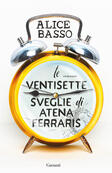
Le ventisette sveglie di Atena Ferraris
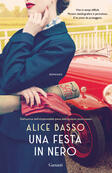
Una festa in nero
But while you read it for your own purposes you’re also free to focus on Darcy’s inner torment, empathize with Lizzie’s nonconformity, or fantasize about how the guy you like in Class III C would catch you alone in the gym corridor one day and make a blazing love declaration, like that big guy there.
Every Author Knows Very Well That, Once Published, Their Work Is No Longer Their
It’s you and the book, and you can do with it whatever you please.
And I’d bet ten centimeters of my already modest height that Jane Austen from the afterlife wouldn’t just not mind; she would have imagined it very well even while writing it.
Because every author, today as much as yesterday, knows that once published, their work is no longer theirs.
And even if it didn’t go well for them, even if they were one of those fussy ones who say “my property is mine and I don’t want anyone to see it in this way or that”… and eh: well, too bad. We’re sorry, friend. It doesn’t work that way, even if you’re angry. (Here we could use an emoji that stretches its arms and laughs, but I suppose the obstinate author of the past would not only find it amusing, but wouldn’t even understand what an emoji is).
The reader has rights and powers over the book. And the book is there for exactly that reason. Because, if the book were to belong only to its author, it wouldn’t have any reason to come out of its drawer.
For this reason, to me, if a girl with ADHD finds that Anna of the Red Hair is like her and devours its books even more eagerly, it doesn’t seem like a bad thing. She can see in it whatever she wants. Like everyone.
And perhaps for her it also means something grand: “If I am like that character, and that character ends up as the protagonist in a book, maybe it means I’m also a person who matters, not just someone who always feels out of place.”
And this, as I see it, is a powerful vision. One of the best things a book can do for a person. Neurodivergent or not.
From Mr. Darcy to Pippi Longstocking, the probable neurodivergences of literary characters
And so, without any offense, here’s a quick tour of the most beloved literary characters for neurodivergent readers and why:
– Mr. Darcy: we already mentioned, autistic-like traits in the bluntness that can seem arrogance, the difficulty with small talk, the way he becomes stubborn about what he deems right — first about “The Bennet Sisters Are the Evil and Must Be Avoided at All Costs” and then, changing his mind, about the opposite;
– Anne of Green Gables: hyperactive, loquacious, full of special interests, intense passions and impulsivity: ADHD;
– Sherlock Holmes: hyperlogical but distant from the codes of tact and empathy: high-functioning autistic;
– Pippi Longstocking: anarchic, uncontainable, unbridled imagination, extremely quick to react to every unforeseen event: ADHD;
– Winnie the Pooh and friends: there are readings (very bright) in which each character is associated with a specific condition (Tigger ADHD, Eeyore depression, Piglet anxiety…) and it fits remarkably well;
– Holden Caulfield: anxiety and depression; then, if we want, his strong sense of justice, his repetitive language and rejection of social conventions could also be autistic traits, while disorganization and being expelled from school would fit ADHD.
I’m absolutely certain you’ll find others… It’s just that this article can’t go on for miles, so I’ll stop here. Also because I have to go review for a lab with some kids. I’m going back to reread Tom Sawyer. And who knows—perhaps he too…
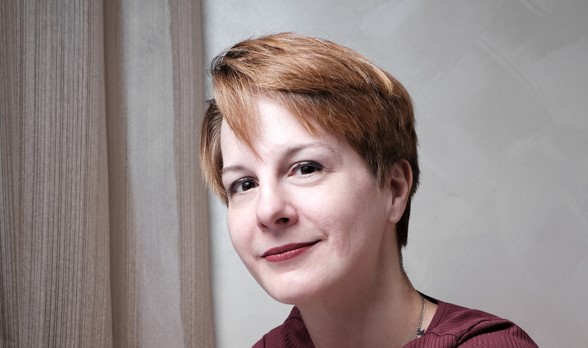
The Author and the New Novel – The writer Alice Basso was born in 1979 in Milan. She works for several publishing houses and lives in a picturesque medieval village outside Turin.
With Garzanti she debuted with the adventures of the ghostwriter Vani Sarca (The Unpredictable Plan of the Nameless Writer, Writing Is a Dangerous Job, Don’t Tell the Writer, The Mystery Writer and A Special Case for the Ghostwriter); in 2020 came The Bite of the Viper, the first installment of a new series, set in 1930s Italy, with protagonist Anita; in 2021 it was the turn of The Cry of the Rose and in 2022 a new adventure of the same series, A Star Without Light; in 2023 The Eagles of the Night arrived in bookstores, with a return of Anita and the 1930s. The series thus concluded with A Black Party.
In 2025 she launched a new series with the book The Twenty-Seven Alarms of Atena Ferraris, introducing a new protagonist, Atena Ferraris (neurodivergent, specifically AuDHD, i.e., autistic and ADHD), who was followed at the beginning of 2026 by The Eighty Questions of Atena Ferraris.
In 2024, the author (also a contributor to our site — here are her self-ironic reflections) entered the world of youth fiction with The Defendieroi Brothers (also published by Garzanti). And recently the second volume of the project aimed at bringing young people closer to reading, The Castle of Challenges, arrived in bookstores (again published by Garzanti).
Among the latest news about Alice Basso, the release of the audiobooks of The Eighty Questions of Atena Ferraris and of The Castle of Challenges.
Here are all her articles for our site.
