
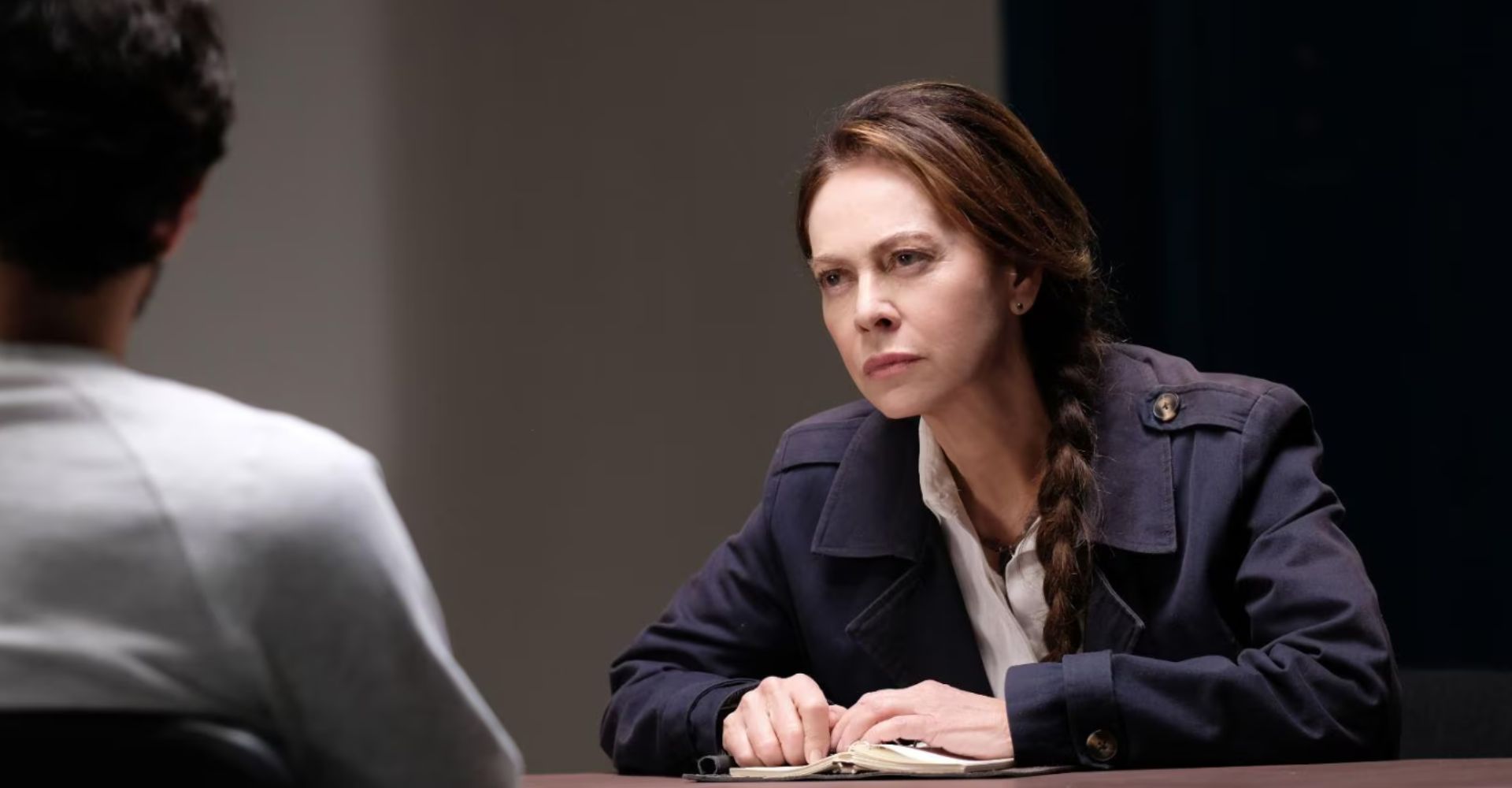
After the first two seasons, Fiori sopra l’inferno and Ninfa dormiente, which aired in February 2023 and during autumn 2024, the third season of I casi di Teresa Battaglia – Figlia della cenere arrives in primetime (see below, ed. note) on Rai 1: of the 8 episodes in total, each about 40 minutes long, the first two were broadcast on Monday evening, October 12, and the remaining will be aired across three more dates (October 19, October 26 and November 2).
A striking return to the role of the protagonist Teresa Battaglia, born from the pen of Ilaria Tuti (who publishes the beloved saga with Longanesi), is played by Elena Sofia Ricci, who in recent weeks has voiced criticisms of the broadcast timings. As reported by Corriere della Sera, the actress emphasized that a production relies not only on the cast and direction, but also on technicians, makeup artists, hairdressers, and all the crew members: thus, in her view, broadcasting so late is a disrespect toward workers and the audience. “From 10 PM we’ve moved to 9:50 PM: a huge success,” she ironized.
I casi di Teresa Battaglia – Figlia della cenere (the direction of which is entrusted to Kiko Rosati) is produced by Rai Fiction and Publispei, and follows the adventures of a profiler who solves crimes in the Udine area, in Friuli Venezia-Giulia.

In this new season, events are set five months after those recounted in the previous one, and Teresa—accompanied by the inspectors Massimo Marini and Giacomo Parisi—must contend with a series of murders: the first victim is a retired man whose finger phalanges have been cut off and whose sternum has been shattered.
In the second episode, the protagonists then investigate the death of a businessman, mutilated in the same way. More killings will follow, all sharing one characteristic: during life the victims had a secret, a sin they had committed.

While the team works under the pressure of a journalist, Sebastiano—the violent ex-husband of Teresa who had nearly caused her death by hindering her ability to have children—returns to Udine and accuses her of being responsible for the threats that he and his new partner are receiving. The profiler is thus called to fight not only against Alzheimer’s, the insidious foe already present in the earlier seasons, but also against the people around her.
We should note that the TV series, produced with the support of the Friuli Venezia Giulia film commission, was shot between Udine, Aquileia and Cividale del Friuli.
