
Maryline Martin, Chemin des Dames Chemins des Larmes, Zinédi Editions, 15/10/2026. 148 pages, €14.90.
I closed my eyes and let History catch up with me
This collection of stories, titled “Chemin des Dames, Chemins des Larmes,” is, in essence, a novel. It feels like a mirror cleverly crafted by a master glassmaker who strikes it just so, breaking it into thirteen roughly equal shards. Maryline Martin here confronts a past that will not fade, a period in French history that has been spoken of many times, yet remains a terrain still veiled in both shadows and light—an area ripe for memory work. The author is chiefly devoted to honoring the memory of her great-uncle, Abel François Victorien Marchand, who fell in the fields of horror in 1917, a forebear whose black-and-white portrait she inherited.
As in Louis-Ferdinand Céline’s Voyage to the End of the Night, readers are eased into the book’s fervor in its opening pages, a fervor that had seized the French nation and driven it toward a “Great and Terrible War.” It should be noted that the human losses of that conflict amount to roughly 18.6 million, including soldiers and civilians. Yet Maryline Martin does not follow Céline’s path. She is equally moved by a desire to honor the women drawn into this surreal slaughter, whether by choice or circumstance. She then closes her eyes and lets History catch up with her.
Eros and Thanatos, Hand in Hand
In Paris’s Place Clichy, alongside Ferdinand Bardamu’s street-side conversations about French patriotism, a medical student companion and the narrator follow the trains bearing troops as they depart from the Gare de l’Est toward the front. It is the era of general mobilization, and Jean Jaurès’s pacifist stance—his fierce opposition to war—casts a challenging shadow over the moment. A fast-conceived victory was sought, with people hoping a swift triumph would justify the sacrifice. Yet such fantasies were fragile.
And so, amid this national fever, a man and a woman unite with a kind of ferocity as a shield against a world teetering on the edge of disappearance. Escaping Thanatos, which would drive men to slaughter, this couple finds refuge in each other’s arms, in a reverie of Eros:
“In this hotel room, the decor is impersonal and time seems to stand still. A pause amid the uproar. A momentary break in a scene where men will don ill-fitting, flamboyant uniforms. The woman who trembles beneath the weight of a body still young is older, more experienced too. She rediscovers gestures she had forgotten for years. Her hands roam through the soldier’s thick hair. Her nails—long and sharp—rake the muscled back. Her lover undulates between open, warm thighs, a carnivorous flower that longs for this supple, virile body. Desire floods her belly, sparks of pleasure light their eyes. The general mobilization is forgotten; a widowed happiness and a valiant warrior give themselves pleasure before the storm of iron and flame.”
Hortense offers her lover a day’s best of herself, memories to stash for the long wintry nights in the damp, mud-filled trench—rats as big as cats scurrying about. Once alone, after Paul departs for the front, she weeps. She weeps like Janine in Albert Camus’s The Mating Woman, Janine who speaks of her loneliness in the face of boredom. Hortense’s tears express the powerlessness of a sensitive being confronted with the world’s hysteria. And this woman will become, unwittingly, the godmother of this memory-work.
A Road Strewn with Shadows and Light
In the new piece “The Ladies of the Path,” war has already taken hold. The author, assisted by the narrator, traces Abel Marchand, a second-class soldier, who was conscripted in Lisieux a few days after Easter in 1915. On April 16, 1917, he finds himself in the Somme, deep within hell’s very core. Along the Path of the Dames, a grim high plateau, he awaits the assault led by General Nivelle. Abel still has a moment left to dream of a better world.
“Suddenly, the Dames of the Path surround me. Victoire and Adélaïde, with their lace and fans, accompany Marie, my charming fiancée. Her lavender eyes look at me with gentleness while her mouth whispers the Normandy hymn in my ear: ‘There is a time in life when every dream must end, a time when the gathered soul must remember.’”
This book also calls to mind the horrors depicted by Jean Rouaud in The Fields of Honour. It lingers on the “Gueules Cassés,” the survivors of the Great War who preferred to be called “old men” to describe their ordinary humanity facing warfare’s terrors. For Michel, a singer in civilian life, bohemian days are forever over. Risen from the dead, he cannot open his mouth behind the mask of blood. A woman whose name rhymes with luck looks after him and changes his bandages. Hortense, who had enlisted as a nurse, is revealed to be Marie’s sister, Abel Marchand’s fiancée. Marie, left to drift, wore a wedding dress even though the wedding never occurred. “The croaking of crows accompanies the litany of the husband’s name.” In the tale “La Lanterne rouge,” Auguste Leblanc is another direct victim of this metastasized madness. Returning from the front on leave, Parisians treat him as if he were afflicted, though he had risked his life for them. Tormented by the “corruptions of the flesh,” he looks into his room’s mirror and sees an old man where the once-dashing 1915 youth stood—and yet, he becomes aroused. He then makes for La Lanterne rouge, a brothel where he had lost his virginity before heading to the front. He reunites with Renée, and the book again begins with a torrid, mouth-watering scene deftly described by the narrator.
“After the standard wash that hardly pleases Auguste, the preliminaries are quickly completed. The man presses his mouth against the prostitute’s lips. His hands knead the body that has haunted him in his most secret dreams. His sharp tongue finds the hidden button beneath a furry hedge. The garden of this girl still holds its heady scent. (…). But when he finally penetrates her, she perceives it as an intrusion; Auguaste’s body wages war on her.”
In “Chemin des Dames, Chemins des Larmes,” French society has become deeply contaminated by the horrors of war, and even its everyday vocabulary turns martial and macabre. The bed where lovers unite becomes “a battleground.” The soldier’s sex is “a bayonet,” his thrusts “blows of force.” The woman’s breasts are “shells.”
The Flower on the Rifle, an Oxymoron as Absurd as a Black Sun
As Nénette confides to her diary, war is everywhere, even in children’s games. “War is like a tunnel from which you long to glimpse the light that signals the exit. But it is so long that it feels endless.” It’s clear that women suffer no less than men in the trenches. They bear the brunt, in their bodies, of humanity’s madness. They work in armament factories en masse, replacing men in every facet of life. Nénette’s mother becomes a punch press operator in the metro and bravely provides for her family, which, of course, lacks everything. In a gesture of patriotism, the lovely Marguerite, the village’s bright flower, withers away in the city’s tainted air. She remains faithful to her Ferdinand, Ferdinand Mérignac, not to the winegrower Ferdinand Bardamu who rises against “those generals and other epauletted ones playing at war as if it were a game of advance horses,” risking the noose.
After this procession of misfortunes, the armistice arrives. In the short story “The War of the Tobobs” Hortense remains, true to her reputation as a white angel. She listens to Abdoulaye Diallo, a Senegalese tirailleur returning home after demobilization. He wishes to see her one last time to recount the events since his conscription into a colonial infantry battalion. This woman becomes the guardian of memory during these great upheavals of History.
Writing this book must have demanded substantial research from its author, as she had to recreate, in intimate detail, France in the early years of the 20th century. In her postscript, after visiting the grave of her ancestor, she states that she feels as though she has fulfilled a mission, a job well done. And she is right:
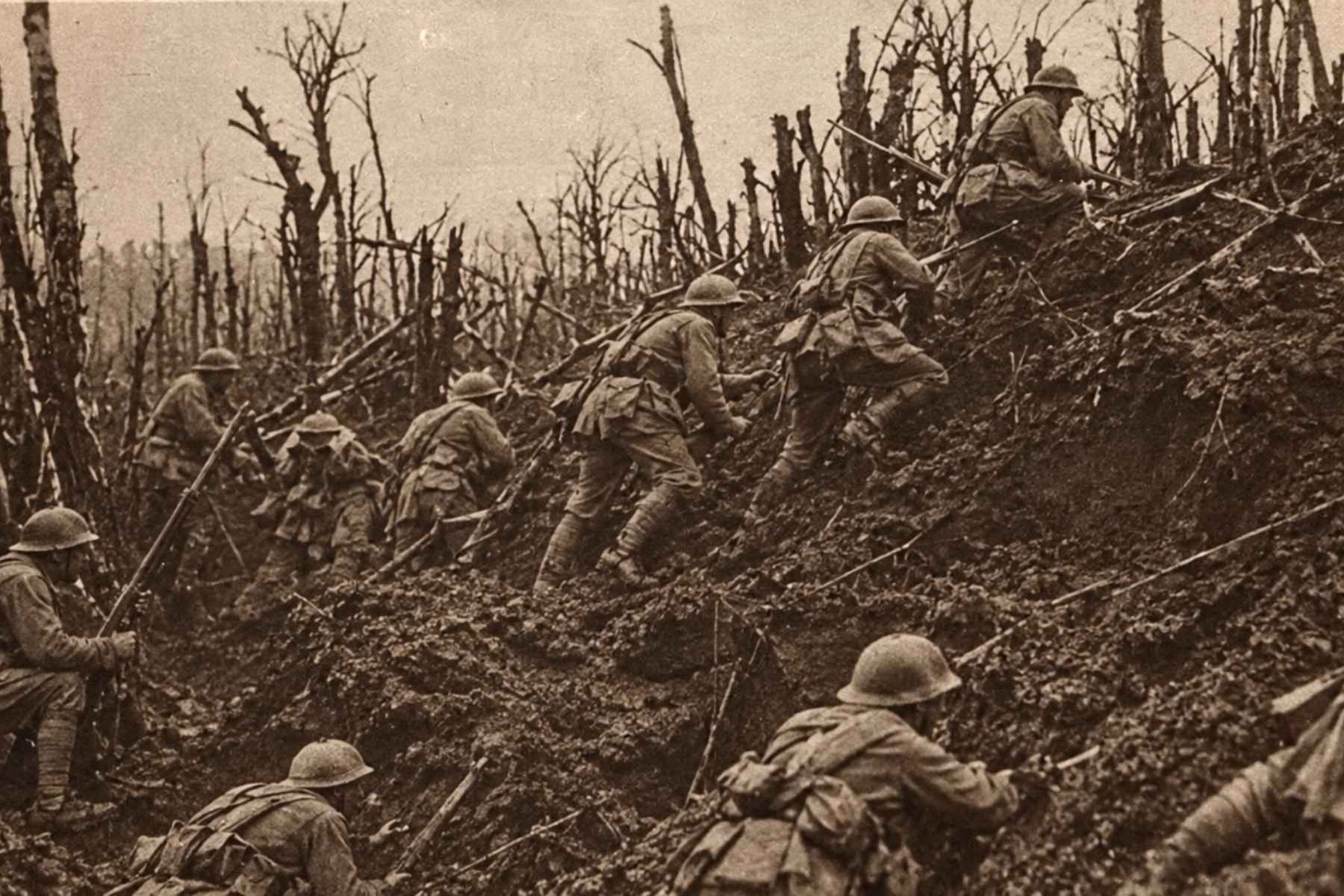
“Before his grave, I felt his presence; I closed my eyes and let History catch up with me. On 16 April 1917, at six in the morning and by order of General Nivelle, Abel François Victorien Marchand, hands gripping his Lebel, leapt from his trench with his comrades from the seventh company of the 156th Infantry Regiment.”
The ancestor Abel Marchand remains present, thanks to this poignant and poetic testimony from Maryline Martin’s lineage. A novel worth reading, without question.
Maryline Martin was born in Angoulême, where she lived before moving to Paris in 2000 for professional reasons. A literary journalist for a Parisian free radio station and the author of numerous works, she places significant emphasis on the role and place of women in History.
The article Chemin des Dames Chemins des Larmes first appeared on Mare Nostrum.
