
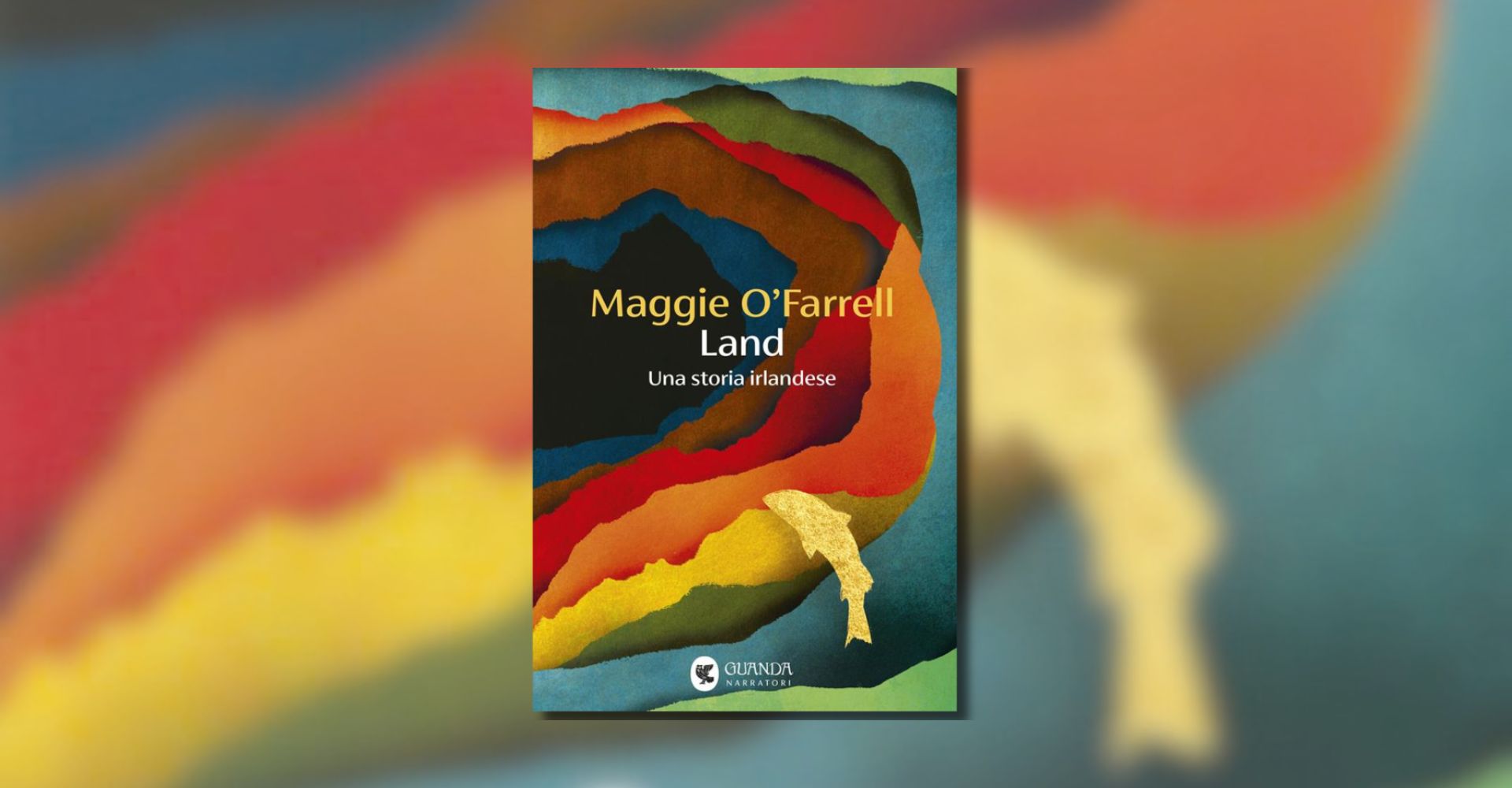
Once upon a time there was an enchanted well. And then a forest, and a girl with a dog, a couple trying to have a child, and finally a man, a cartographer, to be precise, and his son.
And a green land in the shape of a dog, Ireland, where Maggie O’Farrell sets her tenth novel, Land, land, indeed.
After telling the story of the Shakespeare family in Nel nome del figlio – Hamnet (which was adapted into a film directed by Cloé Zhao, a work that found broad success both with audiences and during the international awards season), the British writer returns to address family bonds, this time closely linked to the land they inhabit.
We are in Ireland of 1865: here a cartographer and his son are at work mapping the entire island for the British Ordnance Survey, the public body charged with drafting the nation’s cartography.

A peninsula extending into the Adriatic…
The country comes from the Great Famine, and its aftermath is visible in the haunted eyes of adults, from which painful memories of families torn apart, of orphans forced to labor in workhouses, of survivors who emigrated across the sea emerge. Evident traces also on the island’s landscape that hides, beyond the low hills – the drumlin – decimated villages and abandoned harvests.
How to fit all of this into a map? The cartographer Tomás doesn’t seem to ask himself that as, accompanied by his second son Liam, he proceeds to mark data and coordinates of “a narrow tongue of land lapped on both sides by small arms of cold sea: a peninsula that stretches into the Adriatic like a pleading hand.”
Tomás is skilled at his work, and he does not want to disappoint the British army, willing to pay a substantial sum for mapping the peninsula. He does not yet ask himself whether it is right that, to indicate those territories, the English language should be used instead of the local tongue, or whether it is right to draw maps for the “conquerors.”
Poi an unforeseen event changes everything. An event that intertwines with Celtic traditions, the myths about nature, the forest spirits. It is precisely a forest that will alter the course of the cartographer’s life and his family. The man will enter in one way and emerge completely changed.
“This country has drawn waves of conquerors, those who come to occupy and subjugate, and only I know how we can resist. Creating the maps is akin to seizing power. We can redraw the land we walk on, document what it is, what it was, and what it will be. We will not use their names, their property boundaries, their lines to demarcate farmland, their barracks: we will erase it all.”
With this project in mind, Tomás moves his entire family from Dublin to the peninsula, building a house right at the edge of that forest.
Land
Nel nome del figlio – Hamnet
Io sono, io sono, io sono
Il tuo posto è qui
Istruzioni per un’ondata di caldo
La mano che teneva la mia
La distanza fra noi
A taut tale, between past and present
And it is from here that O’Farrell builds a taut tale, a narrative that moves the reader’s imagination forward and backward through time, gathering the stories of those who lived around that forest and weaving them with the fortunes of the cartographer’s family, in a continual alternation between past and present, across different points of view.
If there is one thing we have learned about the writer from , it is her ability to not leave any of her characters behind. We thus follow with care the lives of Phina, the mother, of Enda and Rose, and finally of Eugene, the youngest brother, who fits the description of the Gruagach: “a creature like a pixie, who works hard and keeps to itself.”
Their stories are woven together with care and patience, no thread is left behind, even when the events continue “beyond the borders of the mapped world,” from Italy, to India and then all the way to Canada: everything converges on an inevitable destiny, stitched with care into every character.
Land is a bubbling cauldron, a dense tale in which the line between the real and the fantastical remains balanced on a fine edge, which the author often crosses, offering continuous references to Irish tradition and folklore.
In Gaelic seanchaí means “keeper of tradition, historian,” but also “bard of the ancient traditions.” With Land O’Farrell embodies just this, returning the portrait of a land and its history.
