
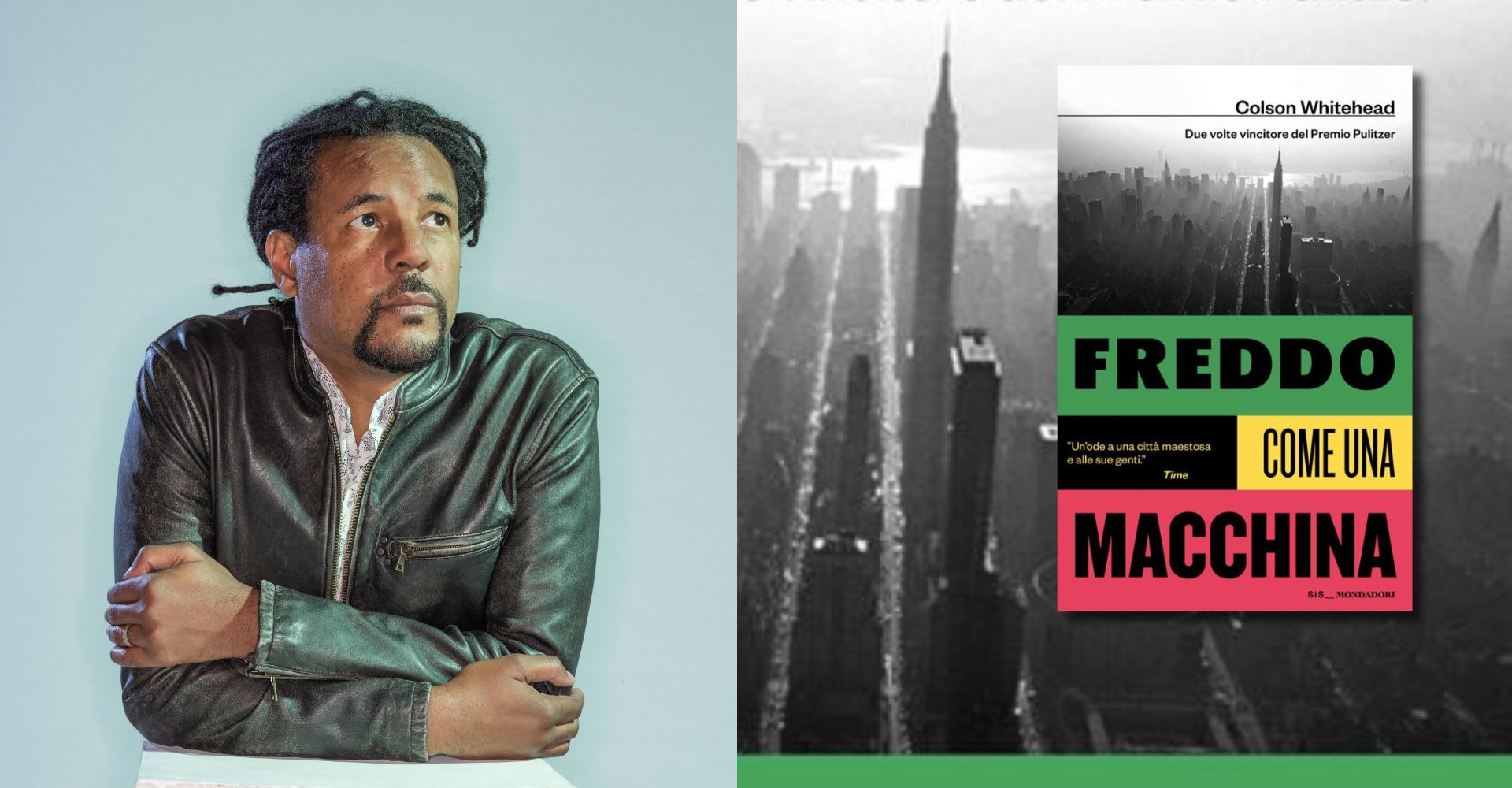
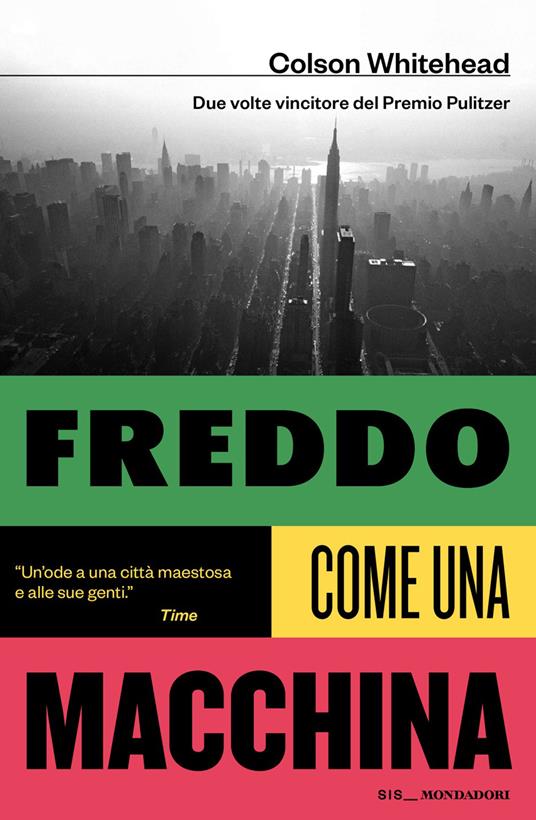
Colson Whitehead is back. The American writer born in 1969, a two-time Pulitzer Prize winner (in 2017 and 2020), is releasing the novel Cold as a Machine (Mondadori, translated by Silvia Pareschi), the third and final installment of the Harlem Trilogy, begun in 2021 with The Harlem Rhythm and continued in 2023 with Criminal Manifesto (both published by Mondadori with translations by Silvia Pareschi).
After his debut in 1999, with The Intuitionist, Whitehead achieved considerable success with the novel The Underground Railroad (Sur, translated by Martina Testa) which tells and evokes the slavery of the early 1800s in the Southern United States, and the escape of Cora. A work that became a TV series as well, it earned him the and the for fiction.
He then published The Nickel Boys (Mondadori, translated by Silvia Pareschi), which renewed the popularity of the New York author. Set in the 1960s, the Pulitzer-winning novel tells the story of Elwood, a boy raised with the myth of Martin Luther King who ends up at the Nickel Academy, a reform school with a dark side, after accepting a ride in a stolen car…
The new book by Colson Whitehead
And so, after the first two installments devoted to the figure of Ray Carney and his adventures through the streets of in the 1960s and 1970s, Colson Whitehead brings back the New York swindler for one final tale. After the first “moral drama” in which we witness Ray’s inner conflicts, and a second book in which Harlem appears in its contradictions – between corruption and ambition, the American dream and oppressive racism –, Cold as a Machine is ready to describe the 1980s: a decade marked by capitalism and the Reagan presidency, with the construction of new skyscrapers while violence animates the less illuminated streets.
Against this backdrop Ray is determined to attempt one last heist to aid his wife Elizabeth’s business, but also to protect his son from the bad company that he himself knows all too well…

Colson Whitehead protagonista a BookCity Milano
To celebrate this eagerly awaited release and to mark the start of the new edition of BookCity Milano, with the new curatorship entrusted to writer Marco Balzano, the event inaugurating the festival will feature Colson Whitehead in conversation with Francesco Costa, in a session hosted by Giovanna Zucconi.
But that’s not all: during the evening, which will take place on November 23 at 8:00 pm at the Teatro Dal Verme, the American writer will receive the Seal of the City from the Mayor of Milan, Giuseppe Sala.
City at Night
1981
A moment in which he was tested. He was a Black man in the United States. When was he ever not tested? For heaven’s sake. He thought of Elizabeth’s latest loan request, rejected by a Virginia bank of rednecks. The system did not know how to frame Carney, and certainly did not know how to handle his wife. He pictured bank officials who had shredded Elizabeth’s loan applications over the last eighteen months: a procession of decrepit tweed mummies, all busy scribbling codes like banking graffiti at the margins of the file, to warn the director that the entrepreneur was Black: nothing would work.
«One moment» said Fisher, flipping through the notes.
From the window Carney watched Mike lead a middle-aged Spanish-speaking lady toward the new Egon showroom. With the renovation, his office had moved from the ground floor to the first floor, and now faced directly onto the showroom. The furniture was arranged as much as possible like in the previous office. He hadn’t managed to find another autographed Lena Horne photo from the days of Stormy Weather, but the new one, a striking color image of her Las Vegas period in the early Seventies, lifted his spirits on bad days. The previous photo represented an eager talent trying to make a name for herself; this one was proof of a stubborn personality. Lena had survived.
The Spanish-speaking woman moved among the ottomans. Shoulders slumped from a stressed housewife, a glazed look. Mike pointed to a Plexiglas table there beside and she laid the A&P bags on it. She had gone out to shop and impulsively jumped in. Had she suddenly remembered the worn armrests of the sofa and the decade-old Kool-Aid stain, or had she just wandered by and been drawn to the new DeMarco sleeper sofa in the showroom window? Displaying the DeMarco Slumber King prominently had been Rusty’s idea; Carney resolved to thank him. Maybe it would lift her mood a bit, given everything she was going through with the divorce.
Mike brought his hands together as if squeezing something, miming the flexible comfort of the polyurethane frame. He knew how to handle it, the kid. He seemed born for that trade: he explained microfibers and payment plans like a Casanova promising imminent pleasures. The client nodded. How long would Mike stay? That new generation bored easily. Once, a job in an uptown store like Carney’s was considered a great career opportunity. Steady, decent pay for that neighborhood. “A positive professional environment,” aside from the occasional arson.
The journalist from “Quality” brought him back to the present. “What do you like most about your job?”
Carney whistled. “Lots of things.”
Like opening the Hermann Bros. safe, model 1977, and placing a stack of cash on top of the one from the previous week, one secured with the bank’s paper strap, the others made up of dirty banknotes tied with a rubber band. Or, the day after a tricky job, thinking back to how things had gone and realizing that he could have died – but he hadn’t. Seeing Elizabeth’s eyes when she opened a gift and not caring whether the money used to buy it was clean or dirty, as long as she was happy, wasn’t that enough?
Carney said: “That little smile on a client’s face when they sit for the first time on a nice new sofa, and they don’t think about the price, or the landlord, or the daughter who needs dental work: they’re thinking about how comfortable it is. About that and nothing else.”
The interview was nearly over. They had talked about his economics degree at Queens College (“It really opened my eyes to fundamental principles”), his twenty-seven years in the furniture trade, the Cold War of Sterling against Collins-Hathaway in the Fifties, corporate mergers and the resulting narrowing of consumer choices. About the fire and the reopening.
«They never found out who did it?» asked Fisher.
«It was New York,» Carney replied. The city was both question and answer. Cause and effect, and everything else as well.
Copyright © 2026 by Colson Whitehead
© 2026 Mondadori Libri
(continua in libreria…)
