A young mermaid finds herself gazing for the first time at the world above the sea and falls in love with the splendid prince who commands a ship nearby.
Determined to do whatever it takes to see him again, she gives up her voice to obtain from the Sea Witch two human legs that will allow her to live on the surface: if the prince returns her love, she can stay there with him forever; otherwise, she will be transformed into
That, in brief, is the synopsis of one of the short stories most famous by the Danish writer and poet Hans Christian Andersen (1805-1875). A tale of metamorphosis and sacrifice, but above all love (even if it is impossible) – which perhaps precisely because of this, and because it is a fairy tale, has led whole generations of boys and girls to believe that the heroine made a good choice by taking the risk.
Also because, let’s face it: what could possibly go wrong?
And they did not live forever…

Yet, continuing in the reading or listening, one discovers with astonishment that almost everything goes wrong.
One misfortune after another, amid obstacles and evil plots, the epilogue of the Sirenetta (contained in the collection Tutte le fiabe, translated by Maria Pezzè-Pascolato and Giuliana Pozzo for Newton Compton) turns out, in fact, to be mostly nefarious for the heroine – and it is only by a hair that we also avert her murder of the prince.
As she grows, one might then learn that Andersen’s work trew from his frustration with a failed courtship and from his complicated relationship with his own gender identity.
That not all fairy tales have a happy ending (especially when we look at the broad and authoritative body of authors such as Giambattista Basile, Charles Perrault, and Jacob and Wilhelm Grimm) and that, more generally, many cornerstone texts of the Western canon – whether we like it or not – conclude with an explicit triumph of Evil.
Wherever Evil Slithers
Just as in life, in literature there are countless ways in which evil can manifest itself.
Sometimes it is introduced as an abstract, either secular or religious entity; other times it is the consequence to which protagonists are subjected in an inexorable moral corruption. It can coincide with the death of a character, concern the fate of an entire people, or amount to an individual defeat of a emotional, social, or ideal kind.
And again: it appears on the pages in a manner now more widespread, now incarnating in a precise figure. It may have long been weaving a sinister plot against those around it, or it may have won almost by chance, if not through some prophecy or curse that, despite every effort to elude it, comes to pass to the letter.
What is certain is that, very often, its influence is deadly. Those who encounter Evil on their path hardly manage to shake off its memory, its words, or its magnetism, and the parables that follow almost always foresee a disastrous fall into the abyss.
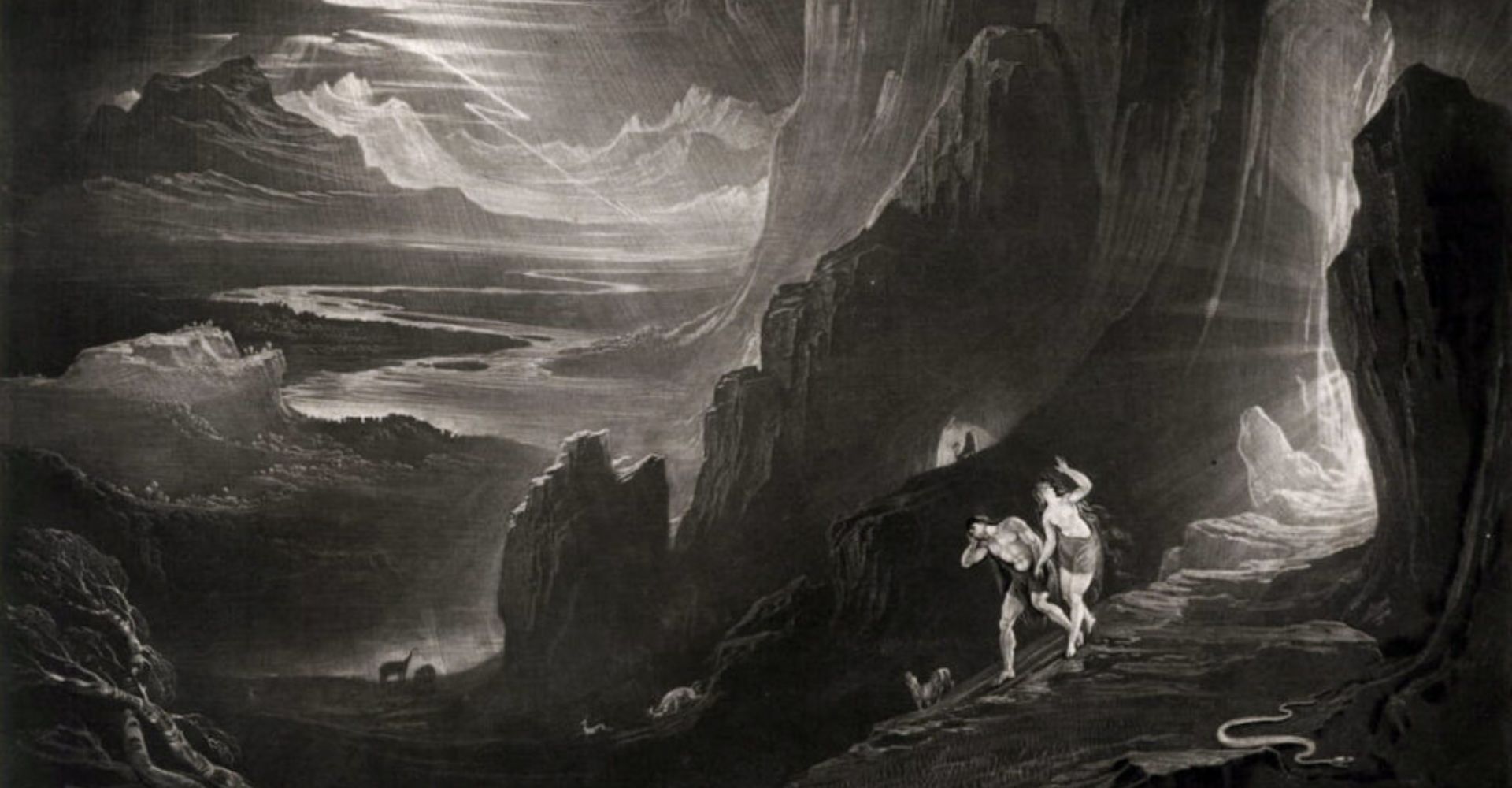
Basta pensare a uno degli finali più antichi corrispondenti a questa descrizione: quello con cui, nella Bibbia, si conclude il primo grande passaggio della Genesi, nel momento in cui Adamo ed Eva vengono cacciati dal Paradiso terrestre dopo aver commesso il peccato originale, poiché tentati da Satana sotto le spoglie di un serpente.
Uno scenario dal fascino sinistro e a tratti disturbante, che, in questo come in tanti altri casi dei secoli successivi, senza dubbio richiede a chi ama leggere un po’ di pelo sullo stomaco: se là fuori, sugli scaffali, esistono infatti migliaia di libri a lieto fine con cui tenere alla larga preoccupazioni e stati d’animo non sempre idilliaci, per quale motivo dovremmo dedicare il nostro tempo a un testo che sappiamo approderà a una chiusa negativa?
Every unhappy ending is unhappy in its own way
The reasons, in truth, are more than one.
There are those who need to retreat into stories that deliberately make them cry in order to get over a difficult moment – as when, perhaps, we try to cope with the end of a love by immersing ourselves in novels such as One Day This Pain Will Be Useful by Peter Cameron, Days of Abandonment by Elena Ferrante, or Separate Rooms by Pier Vittorio Tondelli, which may not make us feel better right away, but at least make us feel understood in our temporary despair.
Then there are those who regard the happy ending as a too distant prospect from real life and prefer to wander along less-traveled narrative paths: adrenaline-pumping, countercultural, or perhaps capable of sparking an intriguing ethical dilemma, prompting the boldest readers to root for the villain or the heroine.
And there are those who, when things go wrong on the page, console themselves thinking that it is not too late to prevent the same tragic ending from unfolding in real life, perhaps precisely because the most dystopian or apocalyptic perspective has already been exorcised on the narrative plane.
For all of them – or for anyone who would exceptionally step out of their own comforting zone of dreamy settings, good guys, and heart-warming episodes to confront the age-old question: “Why does literature keep insisting on representing Evil?” – we have gathered here a series of books with a retrogusto far from Disney.
Classical and cult novels we have selected without claiming to be exhaustive among those published by 2000, so as not to miss out on some information about more recent titles you may still need to catch up with (such as those released over the summer or that opened the September rentrée).
We would wish you a good reading, but given the context, we hope rather that it is a beautiful and damned experience, both for those who already know the dark-tone stories and for those who might find among the ensuing titles the one that will push them (with a slight shiver of cold) to delve into the topic for the first time…
And, for those who want to know more about the atmospheres and the darkest characters of yesterday’s and today’s literature, here are many other ideas to spark inspiration:
- The Devil in literature: all the faces of Absolute Evil
- Rooting for the villains of literature… a journey through books of yesterday and today
- Why does literature prefer to represent Evil?
- The antagonist: the negative (and more important) side of a story
- Books about the shadow: on the other side of the light
- Books about the women of yesterday and today: myth, history and feminism
- Books about sects: gurus, secrets and attempts to escape
- Horror books to read: over 20 works that will keep you up at night
- The dangerous charm of cursed books
- There is no light without shadow: what would the world be like without the villains
- True crime books, a journey between classics and new releases
- Gothic novels: origins, features and classics to read
- The apocalypse in literature: novels that are the end of the world
- Books for those who love the charm of disturbing atmospheres
- Books about the Abyss: readings that reach deep
- Distopian books to read: 30 recommended novels
Books in which Evil Triumphs in the End
To browse in order of first publication, according to the sequence we have laid out, or choosing each time the text that most piques your curiosity: in any case, we promise not to reveal too many details about plot twists, so you can discover, yourself and in due time, the most varied variations on the theme conceived by numerous authors of yesterday and today…
Macbeth
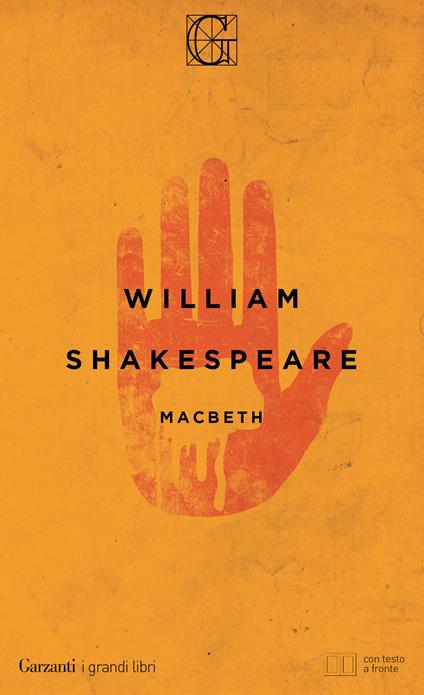
We begin with a cornerstone of literature of all times, Macbeth (Garzanti, translated by Nemi D’Agostino) by William Shakespeare (1564-1616), a five-act drama set in Scotland in the thousand-year-old era. Here, in a landscape dominated by fog and storms, within the dark of castles and courts, three witches prophesy to the general loyal to King Duncan (Macbeth, indeed) that he is destined to become king. Spurred by impatience and by the entreaties of his wife, Lady Macbeth, the man decides to act to make the oracle come true, even though his choice proves, to say the least, ill-fated.
Frankenstein; or, The Modern Prometheus

In an equally somber frame, though this time set in 1816 on Lake Geneva, develops also Frankenstein; or, The Modern Prometheus (Garzanti, translated by Maria Paola Saci and Fabio Troncarelli) by Mary Shelley (1797-1851), perhaps one of the most famous books in which evil triumphs in the Gothic genre. The protagonist is the doctor Victor Frankenstein, who gives life to a creature never seen before by stitching together pieces of dead bodies drawn from morgues and cemeteries. The “monster,” however, finds itself alone, and, scared and confused about its own nature, will struggle to fit in to the world…
The Metamorphosis

Switching setting to one of the earliest books where Evil triumphs by mixing absurdity and the surreal, namely The Metamorphosis (Garzanti, translated by Emilio Castellani) by Franz Kafka (1883-1924), in which the memorable opening narration sees traveling salesman Gregor Samsa waking up transformed into a roach. He begins to realize that he will be late for work as his family repeatedly knocks at his door. He barely manages to get out of bed and turn the key, but at that point the life he knew will change forever.
1984

When we talk about books in which Evil triumphs, it would be unthinkable not to mention 1984 (Garzanti, translated by Bianca Bernardi) by George Orwell (1903-1950), among the best-known dystopian novels of the last century. In a totalitarian society ruled by the Party, which is led by the mysterious Big Brother, Winston Smith works at the Ministry of Truth, where he alters documents of the past to fit the propaganda. He soon enters into a secret relationship with his colleague Julia and attempts to escape the regime’s control, though the situation ultimately spirals out of hand.
The Haunting of Hill House
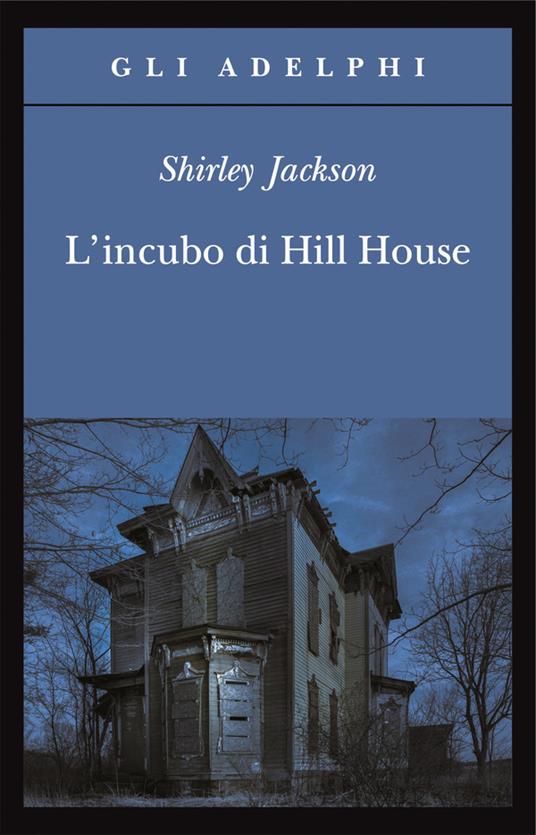
Could this not be included among the books in which Evil triumphs a story titled The Haunting of Hill House (Adelphi, translated by Monica Pareschi)? Among Shirley Jackson’s (1916-1965) most popular works, the tale centers on young Eleanor Vance, invited by Professor Montague to stay with two other guests in a seemingly haunted mansion. During their stay, inexplicable phenomena begin to occur – and Eleanor, eager to find a place to belong, becomes increasingly obsessed with the house.
Tutte le fiabe
Macbeth
Frankenstein
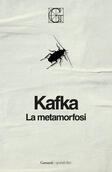
La metamorfosi
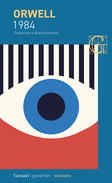
1984 – Ediz. Integrale
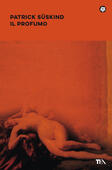
Il profumo

La donna che rubava i mariti
The Abyss
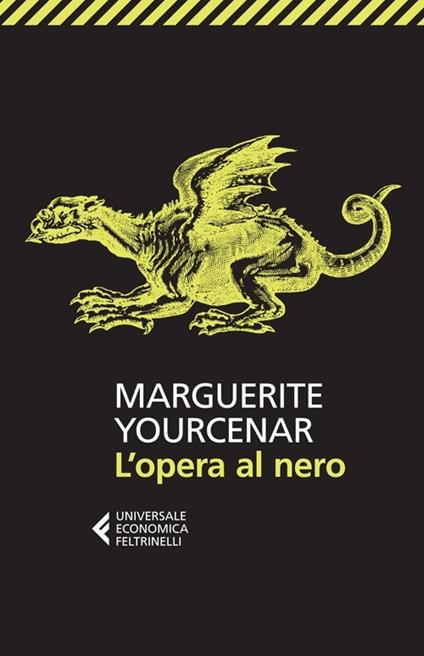
Zénon is an intellectual who lived in the 16th century, roaming across Europe and studying medicine, science, and philosophy. Yet his pursuit of knowledge and freedom leads him into conflict with the Church and the authorities of his time, to the point that when he returns to Bruges he assumes a false identity… Around this nucleus revolves The Abyss (Feltrinelli, translated by Marcello Mongardo) by Marguerite Yourcenar (1903-1987), which, despite the commitment of its protagonist to avoid it, can also be counted among the books in which Evil triumphs most successfully of the 20th century.
The History
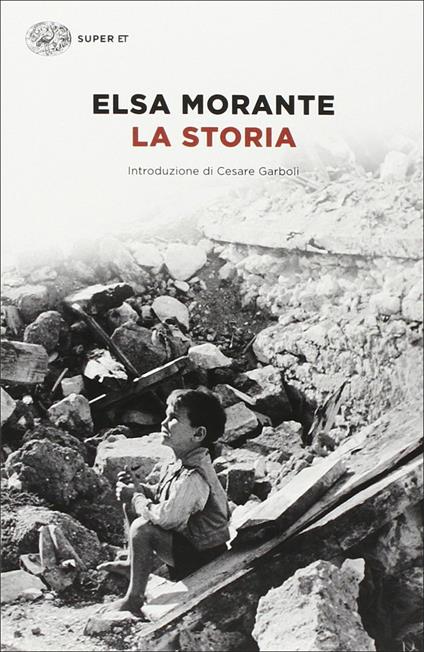
As anticipated, Evil can recur in many ways – and Ida Ramundo, a widow and a Jewish mother of Nino and Useppe, does everything she can in The History (Einaudi) by Elsa Morante (1912-1985) to protect her family from bombardments, the Nazi occupation, and the Resistance. Yet after the war, having survived hunger, displacement, losses, and poverty, it is the fragile and sensitive Useppe who becomes the focal point of the book’s most dramatic section…
The Perfume

We now come to one of the most poignant and disturbing tones in which Evil triumphs among those we have identified here: Perfume (Tea, translated by Giovanna Agabio) by Patrick Süskind, in which we become acquainted with Jean-Baptiste Grenouille, born in 18th-century Paris, endowed with an extraordinary olfactory sense, yet lacking any own scent. Perhaps that is why he develops an obsession with scents and will stubbornly attempt to craft the perfect fragrance to anoint himself, even though his goal will continually push him away from what he desires.
Meridiano di sangue
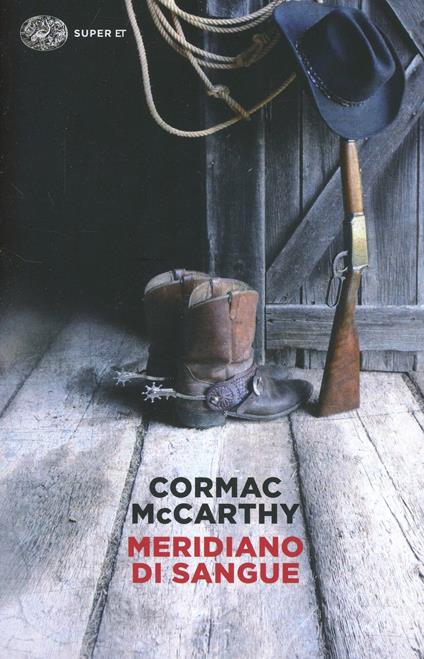
Se siete in cerca di libri in which Evil triumphs in ways that question the line between civilization and barbarity, the novel that fits you best could be Blood Meridian (Einaudi, translated by Raul Montanari) by Cormac McCarthy (1933-2023). In it we follow the misadventures of “the Kid”, a young drifter who, in the mid-19th century America, crosses the border between the United States and Mexico and joins a band of mercenaries led by the violent Judge Holden. At least until he becomes an adult and convinces himself he can finally emancipate himself from their influence.
La donna che rubava i mariti