
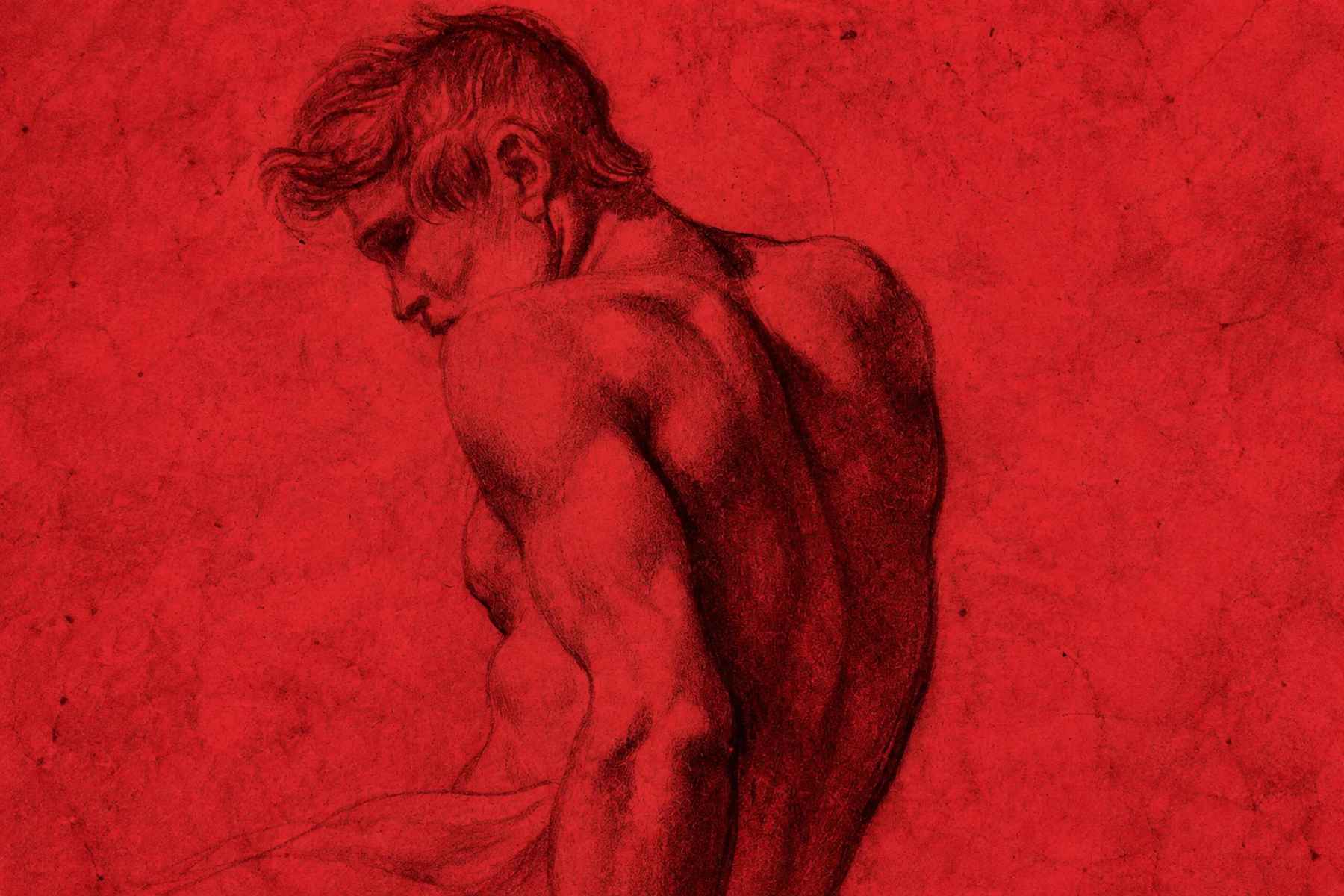
Pauline Valade, Bruno and Jean. Actes Sud Editions, Babel Collection, September 29, 2026, 368 pages, €9.90.
An archive that is not enough
The great originality of Bruno and Jean lies in this paradoxical situation. Pauline Valade has access to historical documents, but they do not truly permit telling the two lives she is interested in. The archives say what the authorities wanted to know. They record a transgression, an arrest, an interrogation, a judgment. They tell almost nothing about the man behind the file. The author then turns to fiction, not to replace History, but to work within its silences. This approach is particularly interesting because it does not pretend to turn hypothesis into certainty. The novel imagines what the archives can no longer reproduce. It gives Bruno and Jean a daily life, a city, encounters, worries, desires, and a possible relationship. Where the tribunal saw only a “crime,” literature tries to recover two people. The gesture is deeply humane: to restore to those subjects what History had reduced to mere objects of the proceedings.
The Popular Paris of the Eighteenth Century
Bruno and Jean are not figures of the elites. Bruno is a shoemaker; Jean is a domestic servant. They belong to an underserviced lower class in eighteenth‑century Paris. Their social condition is essential to the novel. Valade thus does not merely recount a story of homosexuality. She also tells a popular story. She makes the streets, the trades, the meeting places, and the sociabilities of a Paris where modest lives rarely leave traces come alive. This social dimension greatly enriches the book. Sexuality is never presented as an isolated reality: it is embedded in class relations, in survival strategies, and in a society where visibility can become dangerous. One of the merits of the novel is thus to show that a history of homosexualities cannot be separated from social history.
Could one speak of “homosexuality” in 1750?
The book also invites reflection on the categories we use to talk about the past. Using the word “homosexual” regarding Bruno and Jean can be useful to designate their practices or their relations between men. But one must avoid projecting onto the eighteenth century the homosexual identity as it was built in the nineteenth and twentieth centuries. Bruno and Jean are not necessarily “gay” in the contemporary sense. They belong to a world where sexual, medical, social, and identity categories are very different from ours. What exists with certainty, however, are practices, desires, encounters between men, and a sociability that can be clandestine. And above all, there exists an institution capable of turning these practices into a crime. This distinction is essential for a serious history of homosexualities: the existence of desire between people of the same sex is far older than modern homosexual identity.
From sexuality to power
The journeys of Bruno and Jean also show how the body can become an object of power. The desiring body becomes a suspect body; the suspect body becomes a body in custody; the body in custody becomes a body judged; finally, the judged body becomes a body tortured. Their story thus reminds us that sexuality is never merely a private matter when a legal and moral order decides to regulate it. However, one should avoid overly rapid comparisons with the persecutions of homosexuals in the centuries that followed. France in 1750 belongs to an Ancien Régime society; Francoist Spain in the twentieth century belongs to a modern dictatorship equipped with police, judicial, and medical instruments that are very different. Yet the comparison helps to grasp a long history of the mechanisms of stigmatization.
In Francoist Spain
The 1954 reform of the Ley de Vagos y Maleantes explicitly included homosexuals among those deemed “dangerous.” The Ley de Peligrosidad y Rehabilitación Social of 1970 continued this policy in another form. Recent research also shows how tightly this repression was tied to social, police, medical dimensions and the moral context of national-Catholicism. The comparison with Bruno and Jean does not mean that the two situations are identical. It shows that forms of control change, while the question of the visibility of minority sexualities remains.
Bruno and Jean, Lorca and Cernuda
This reflection naturally opens onto another memory: that of Spanish homosexuals in the twentieth century. Federico García Lorca stands as a particularly strong figure. For him, literature becomes precisely the space where what society does not always allow to speak openly can be expressed. The Sonetos del amor oscuro, long kept unpublished, notably contributed to revealing after his death an essential homoerotic dimension of his work. Luis Cernuda performs a similar gesture, but within a different personal history marked by exile. For him, homosexual desire becomes a poetic matter that is assumed and durable. The difference with Bruno and Jean is, however, fundamental: Lorca and Cernuda left behind literary works. Bruno and Jean left only a judicial archive. This is why Pauline Valade’s work is particularly valuable. She writes for two men who could not write their own memory. She seeks to bring forth a voice where there is no voice left to speak.
A literature of queer memory
Bruno and Jean can thus be read as a work of queer memory, provided we ascribe a precise meaning to that phrase. It is not simply about adding two homosexuals to the grand narrative. It is about questioning the very mechanisms that produced oblivion. Who kept the archives? Why? In what words? What remains of the individuals when the only institutions that bothered to record their existence are those that persecuted them? Queer memory seeks precisely to shift the focus: not only recount persecutions, but recover the lives that existed before them. The novel becomes profoundly moving. It does not reduce Bruno and Jean to mere victims. It strives to restore to them an existence. They may have loved, and perhaps hoped. They had a trade, habits, fears, desires. Before being condemned, they were men.
Restoring the right to have lived
The strength of Bruno and Jean ultimately lies in this very simple and profound operation: turning two names into two people. The court had preserved their death. Pauline Valade tries to recover their lives. She does not claim to know everything the archives lost. She does not claim to reconstruct with certainty their intimacy. She uses fiction with prudence, to convey what the historical document can no longer transmit. This is what gives the book its universal dimension. Bruno and Jean are not merely two men executed in 1750. They become representatives of all those minority existences that History long recorded only when they became a problem for institutions. The novel thus reminds us that the history of homosexualities cannot be merely a chronicle of laws, condemnations, and persecutions. It must also be a history of desires, meetings, loves, sociabilities, and ordinary lives. In this sense, Bruno and Jean aligns with, across centuries and through different means, the memory-work around Lorca and Cernuda: to ensure that homosexual desire does not remain associated only with shame, silence, or persecution, but can also be told as a human experience. Pauline Valade does not resurrect Bruno and Jean; she frees them from oblivion. In 1750, justice reduced them to a crime. In 2026, literature gives them a face. And with that face, something even more essential: the right to have had a life before a death.
The article Bruno and Jean by Pauline Valade – clandestine love in 1750 appeared first on Lythrum Press.
