
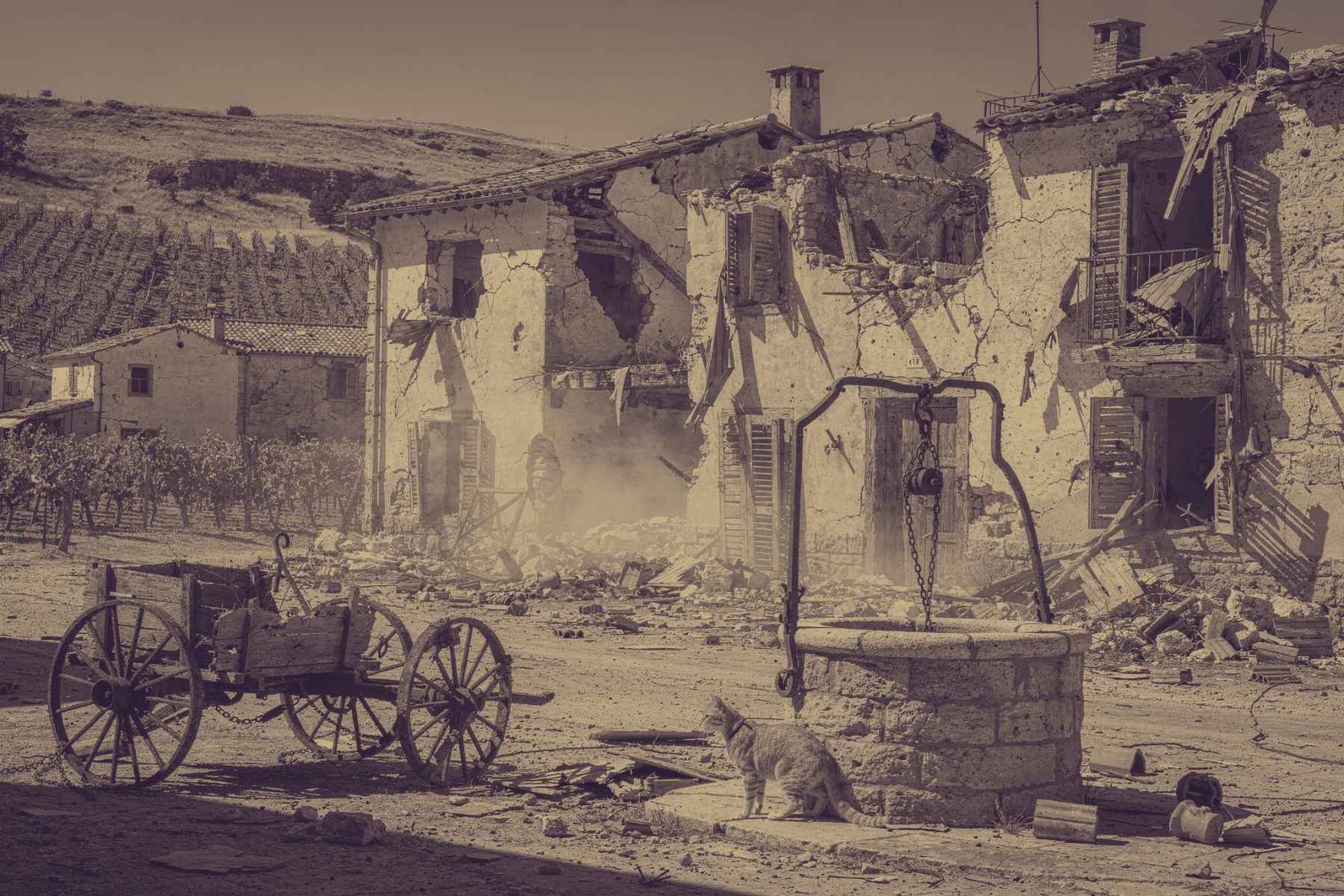
Arturo Pérez-Reverte, Line of Fire (Ligne de feu), Gallimard, August 20, 2026, 656 pages, €25
Arturo Pérez-Reverte returns to one of the bloodiest episodes of the Spanish Civil War: the Battle of the Ebro, which began in the night of July 24 to 25, 1938. The book had been published in Spain in 2020 under the title Línea de fuego. This novel now appears in France with Gallimard. The author chooses to tell this battle not from the headquarters or the major political figures, but from those who lived it: soldiers, nurses, officers, journalists, young recruits, and seasoned fighters. The result is a vast choral novel that seeks less to explain the Spanish Civil War than to convey what it was like for those who found themselves “on the front line.”
The narrative device is original. The village of Castellets del Segre is imaginary, as are several units and characters, but they are placed within a historically real framework. This fusion allows the author to transform the Battle of the Ebro into a kind of human laboratory. Fiction does not pretend to replace History. It gives faces to those whom archives and statistics tend to reduce to numbers. This is probably the great achievement of Line of Fire. Pérez-Reverte knows how to immerse the reader in the materiality of war… “on the ground.” Dust, heat, fatigue, explosions, injuries, fear, and waiting compose an almost physical experience. The writer has a very concrete sense of combat. War is not an ideological abstraction. It is primarily a bodily experience.
This focus on the body also helps to restore the youth of the combatants. Many are very young. They still have families, childhood memories, loves, habits, sometimes a fragile political conscience. War brutally pushes them into adulthood. It robs them of a portion of their lives before they have even had a chance to live it. The novel is thus less a heroic epic than an anti-epic. Courage exists, but it does not give meaning to death. Acts of courage do not erase fear or the absurdity of combat. A brave man can die in the same way as a terrified man. In this perspective, the author joins an important tradition of the war novel: showing that individual heroism never suffices to justify the war itself.
One of the book’s distinctive features is to give voice to both sides. Republicans and nationalists appear as human beings, with their beliefs, doubts, their cowardice and their courage. This chorale construction is both the novel’s richness and its main challenge. It helps avoid a simplistic representation of the Spanish Civil War. A “Republican” is not necessarily a convinced ideological activist; a nationalist fighter is not necessarily a fanatic. Individual motivations are varied. Some fight from conviction, others from family loyalty, others still because they were mobilized. But this narrative symmetry raises a crucial question. Can we humanize the fighters without giving the impression that the two sides are historically equivalent?
The answer requires a distinction between three levels. There can be an equality of dignity among people; there can be a literary symmetry of viewpoints; but that does not necessarily mean an equality of political causes or historical responsibilities. This is where Line of Fire calls for a critical reading. Some Spanish commentators reproached Pérez-Reverte for flattening too much the ideological differences between the camps and gradually turning the political conflict into a clash between men who were also victims of the war. The novel is perhaps “too” didactic, and the risk may lie in a portrayal that ends up neutralizing the political differences of the conflict. This caution is important. The Spanish Civil War is not only a history of shared sufferings. It is also a history of military uprising against the Republic, of competing political projects, of violence, repression, and differentiated responsibilities. Acknowledging the fear or the courage of a nationalist fighter does not amount to treating as equivalent the political project to which he belonged. Similarly, recalling the violence committed on the Republican side does not erase the broader context in which those acts occurred.
The strength of the novel lies precisely in making this distinction possible. It does not seek so much to “balance” History as to look at the individuals who experience it. Pérez-Reverte has himself defended this intent to place the focus on the fighters rather than on ideological discourses. This book is above all a work of memory. The novelist seeks to save from oblivion those whose names have not endured. He invents characters to render plausible the experience lived by thousands of men and women. This approach aligns with an important evolution in contemporary Spanish literature devoted to the Civil War. After narratives centered on major events and famous figures, many writers have turned to family memories, to the anonymous, to victims, to exiles and descendants. Fiction thus becomes a tool of transmission.
However, Pérez-Reverte nonetheless takes a different path: he returns to the battlefield. Where other writers question the war’s consequences decades later, he wants to show the war as it unfolds. His novel is thus an attempt to make the present tense of catastrophe felt.
The Ebro River, from this perspective, becomes far more than a backdrop. It is a boundary, an obstacle, a promise, and ultimately a kind of tomb. The landscape itself becomes memory. The paths, hills, and villages bear the traces of violence that future generations will need to learn to decipher. This dimension gives the novel a particular resonance today. The Civil War now belongs to a memory largely transmitted by those who did not witness it. The witnesses disappear; the archives endure; families attempt to reconstruct interrupted histories. Literature then acts in the spaces left vacant by silence. But it must not be confused with History. The Castellets del Segre in the author’s fiction is not a historical place. It is a literary place. Its characters are not witnesses rediscovered in an archive: they are fictional constructions. Yet, their fiction makes it possible to approach something true—the human experience of war. This is the truth that Line of Fire seeks.
Yet the novel is not free of weaknesses. Its abundance of characters, military details, and battle scenes can sometimes slow the narrative. Some figures seem more intended to represent a category than to acquire genuine psychological depth. The desire to explain everything to the reader sometimes yields a didactic effect. But these caveats do not cancel the power of the project.
For the true subject of Line of Fire may ultimately not be the Battle of the Ebro. It is the memory of the people who made it.
The author, in the end, compels us to view the words “Republican” and “nationalist” differently. Behind collective categories, there were individuals. Some had chosen; others had been swept along. Some were convinced; others hesitated. All could be afraid. All could suffer. This humanization is valuable, provided it does not become a moral equivalence in history.
We must therefore maintain two truths together: fighters can be morally equal in their dignity, even if the causes for which they fought are not historically equivalent. It is in this tension that the value of Line of Fire lies. It does not completely resolve the problem; it stages it. The novel reminds us that the memory of the Civil War remains a battle of the present, a battle no longer fought with weapons but with narratives, archives, novels, and memories.
The Battle of the Ebro ended in 1938. The war of memories, however, is not over. And perhaps this is what gives Line of Fire its true significance: beyond the front line, beyond the uniforms and ideologies, the novel seeks to salvage anonymous lives from erasure. It does not merely recount a battle; it attempts to restore faces to History.
In sum, the novel is not without its flaws, but its core achievement lies in its insistence on remembering the human beings behind the names and the causes. It remains a powerful contribution to the literature of memory and to the ongoing conversation about how to tell the story of a war that continues to resonate in the present.
The article Ligne de feu by Pérez-Reverte, when the war loses its heroes, first appeared on Mare Nostrum.

Amelia Hartwell
I write about books the way I read them: slowly, curiously, and with attention to the details that linger after the final page. At Lythrum Press, I cover literary fiction, essays, memoirs and the wider culture of reading, with a particular interest in voices that challenge familiar ways of seeing the world. My work is guided by one simple idea: a good book deserves more than a reaction — it deserves a conversation.