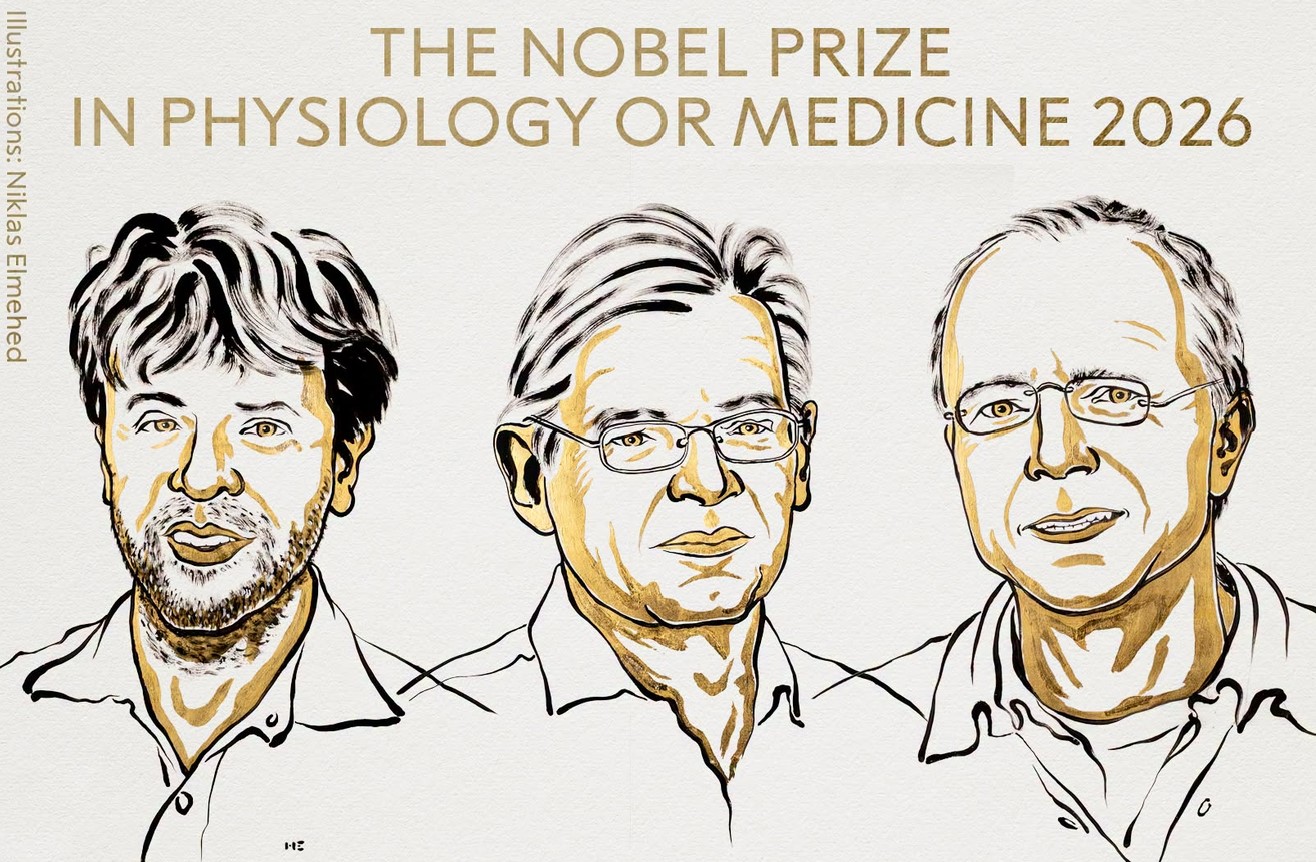
We reprise this February 18, 2022 article to mark the awarding of the 2026 Nobel Prize in Physiology or Medicine to Karl Deisseroth (author of the book featured), Peter Hegemann, and Georg Nagel, “for discoveries of light-activated ion channels and for the development of optogenetics”.

Remote-Controlled Mice
Here is how it works: you take a gene from an alga, insert it into a virus, and then bring that virus into contact with a precise spot in the brain, that is, with a cluster of nerve cells located in a specific place of that enormous gelatinous mass inside the skull that governs animals’ actions and shapes their feelings. At that moment the gene we took from the alga is inserted by the virus into the long DNA sequence of the neurons in that region of the brain.
I wrote “this is how it’s done,” as if it were nothing, but in truth it is a miracle-like operation and today it can be done only because genetics has become an incredibly sophisticated science, able to rely on technologies that would have been deemed simply unthinkable only a few years ago. “Any sufficiently advanced technology is indistinguishable from magic,” Arthur C. Clarke used to say.
To see things more clearly, that algal gene is paired with also a luminescent protein, that is, a substance that when struck by ultraviolet light emits a bright yellow glow. So we let nature take its course: in the damp biochemical tangle of the cellular machinery of those neurons, the DNA will naturally be “translated” into RNA, and this will then be “read” by ribosomes, which on the basis of the instructions they have received will produce specific proteins that will be released into the cytoplasm and spread through the cell. Among these proteins you will now also find the algae-derived one and the additional luminescent marker, which signals its presence. The first will do a certain thing (cause a certain effect, which we will see), the second will tell us where that thing is happening.
It is called rhodopsin and it also reacts to light. For the alga it serves to position itself optimally with respect to sunlight; after all, it is an alga, it lives by photosynthesis, and knowing where the sun is matters vitally. When rhodopsin is struck by light it opens certain channels in the cell membrane, allowing the passage of certain ions and thereby generating an electric current that moves the organism. This happens in the alga. But in the neuron, where it is now unnaturally located, when struck by light it triggers a cascade of reactions that have the effect of causing the electrical impulse to discharge: in practice, it puts in motion, by command, a single neuron with light. Think of it as the doctor’s mallet tapping the kneecap, forcing the leg muscles to spring into action on command.
At this point we can insert ultra-thin optic fibers into the brain (of a mouse); when we turn on the light that neuron becomes active, when we switch it off it will quiet down. We are able to remote-control a mouse with a dial and to observe the effect of each neuron on its behavior.
All of this falls under the name of optogenetics, the latest-born among futuristic biomolecular technologies. Among the pioneers of this technique is Karl Deisseroth, author of Projections (a volume in bookstores from Bollati Boringhieri, note).
This is the “cold” phase of research, the purely technological one. The “hot” phase, instead, speaks of emotions. Yes, because all this technological apparatus serves to try to answer humanity’s eternal questions: what is sadness? why do we cry? where does fear originate? and euphoria? and falling in love? Whether we like it or not, emotions originate in our brain; they have a material base, clearly inscribed in the neurons and in their tangled connections.
Thanks to optogenetics, step by step, nucleus after nucleus, turning on and off the immense electrical framework of our feelings, we are slowly shedding light on some of our emotions, on their origins, and on their evolutionary meaning.
It is patient research, certainly not definitive, in continual becoming; but some of our emotions are gradually revealing their secrets, and all this does not take away anything (because knowledge never takes anything away; it adds) from their timeless allure.
*The author is the editorial director of Bollati Boringhieri