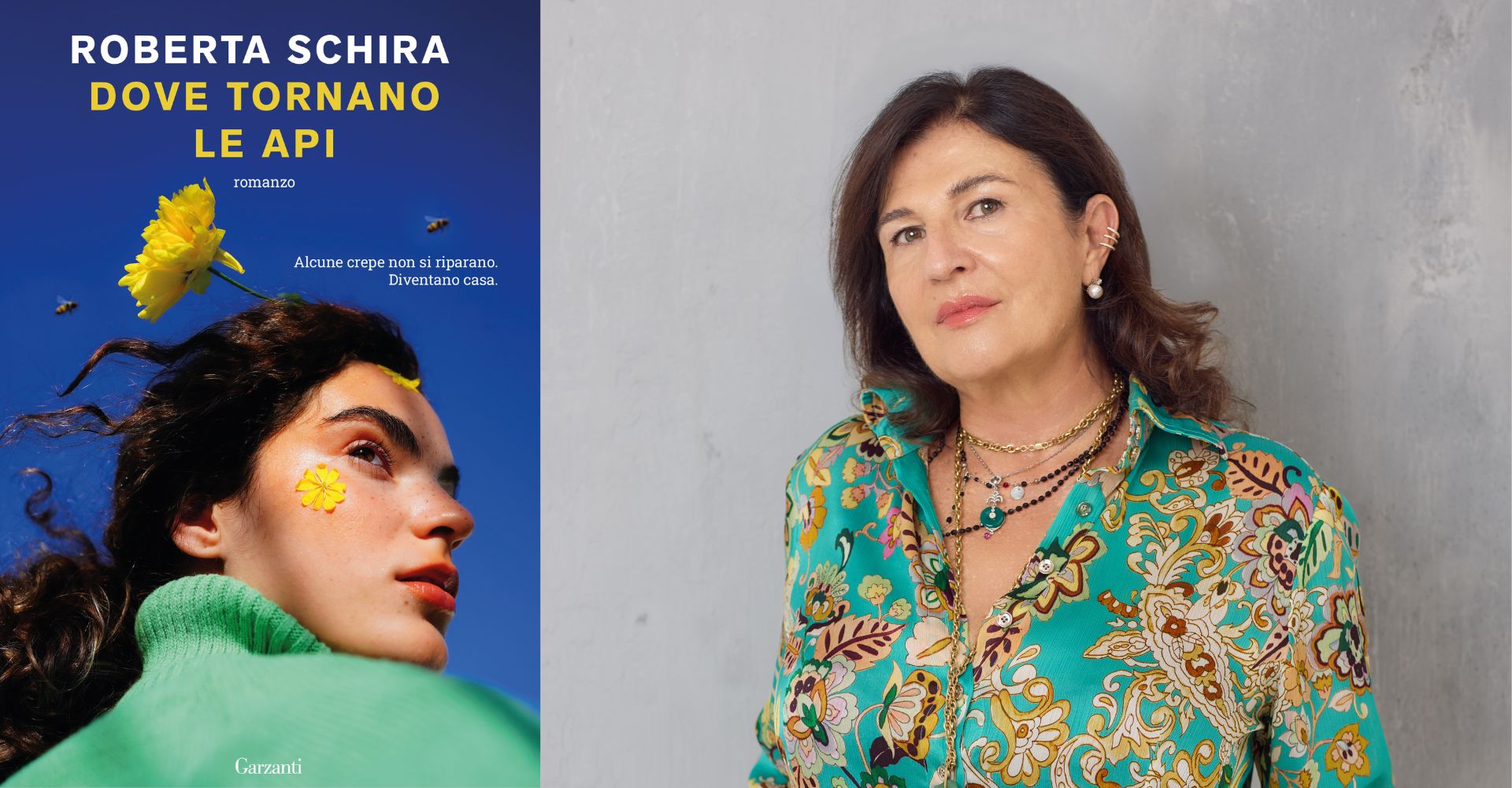
For a long time I would have said that Where the Bees Return, my new novel, is born from a girl.
Years ago a friend told me about her childhood. She had been raised by a man who was not her biological father. The mother, unable to look after her, had entrusted her to that man without ever turning back. What struck me was not the pain of her story, but the absence of rancor.
She spoke of her mother with a compassion I couldn’t explain. From that day I knew that, sooner or later, I would write about a girl like that. I knew who Esther was. I didn’t yet know where to accompany her; I lacked the world capable of welcoming her.
The answer arrived many years later, in an apiary, during work trips between the Marche and Tuscany.
For decades I have been involved with food. I am a food critic: I am always on guard, I judge, I measure. And that profession, over the years, I turned toward myself as well, toward my body.
To be a female food critic means eating as a profession, and for a woman the bill lands on the body: for years I kept it under control to protect a job I love. Sometimes it won, sometimes I did. I crossed it, and today I know how to manage it: this is the word I use. But that day, among the bees, something happened I hadn’t foreseen.

Le margherite sanno aspettare
I fiori hanno sempre ragione
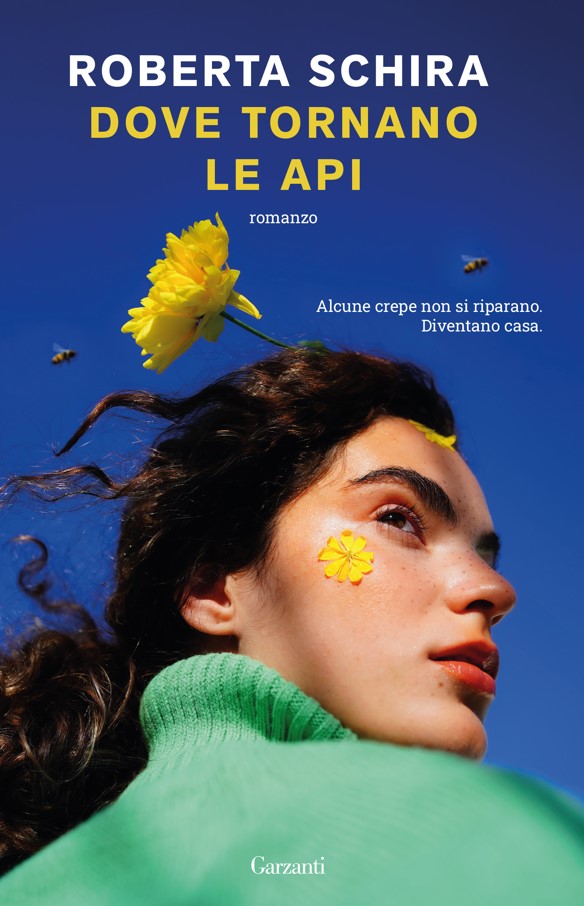
Dove tornano le api
Why are we so fascinated by bees?
Before approaching the hives they made us wear beekeeper suit. I thought I would feel awkward, even more conscious of my body. It turned out the opposite. I watched the people around me, tall, short, thin, sturdy: inside those suits every difference disappeared. We were simply human beings in front of thousands of bees.
Nobody was more beautiful, younger, or more mistaken than another. It was an unexpected freedom. Then came the buzz. The beekeeper spoke of the bees with a gratitude I had never heard directed at, not to say an insect, but at an animal. I returned home with a question that wouldn’t leave me: why are we so fascinated by bees?
The bee is a living being, all body
I began studying them. Books on beekeeping, ethology, biology. I thought, naive as I am, to seek the usual metaphor. Instead I found a way to know the world. And I found, above all, a body: the bee is a living being, all body. It transforms nectar into honey inside itself, it communicates to its sisters the distance and direction of the flowers with a dance of its abdomen, and when it stings to defend the hive it dies torn apart. It does not hold back its body; it uses it, to the last.
“No bee has ever looked at its own body, and no bee has ever had a problem with its own body”
It does not know that self-distrust toward oneself that we call discipline. And it does all this in the dark: inside the hive there is no light, the bees never see each other, they recognize each other by smell and touch. No bee has ever looked at its own body, and no bee has ever had a problem with its own body. We, instead, have invented the mirror. Yet the hive, since time immemorial, solves the problems on which we, boastful human beings, trip: how to live together, how to share burdens, how to protect what is fragile.
Bees are not perfect, as everyone believes
Bees do not teach how to heal. They showed me that a complex community does not demand perfection: it only asks that everyone finds their own place. Because bees are not perfect, as everyone believes: they err in the hive and on the path, they build crookedly. Even the hexagon we admire is born round: it is the heat of their bodies that shapes the wax and gives it that form. And when a frame is crooked they do not straighten it: they build around it. No bee asks another to fix herself. In winter they cluster in a warm ball, and those on the edge, in the cold, after a while slide inward while others take their place.
In that moment I understood where Esther would return. Not among the bees because nature saves, but because nature does not judge. It does not separate good from evil, because it knows they reside in the same body. Montaigne wrote four centuries ago: every man carries within himself the entire form of the human condition.
Esther contains all the good and all the bad that has happened to her; and those who hurt her, too. No one is a monster, no one is innocent. It is there that my novel truly came to life. From the encounter between a girl who for her whole life has tried to keep herself together by stealing buttons and who, on the edge, in the cold, was left alone, and a world that offers her, for the first time, the possibility of belonging to a community where there is room for her and for her incurable fragility.
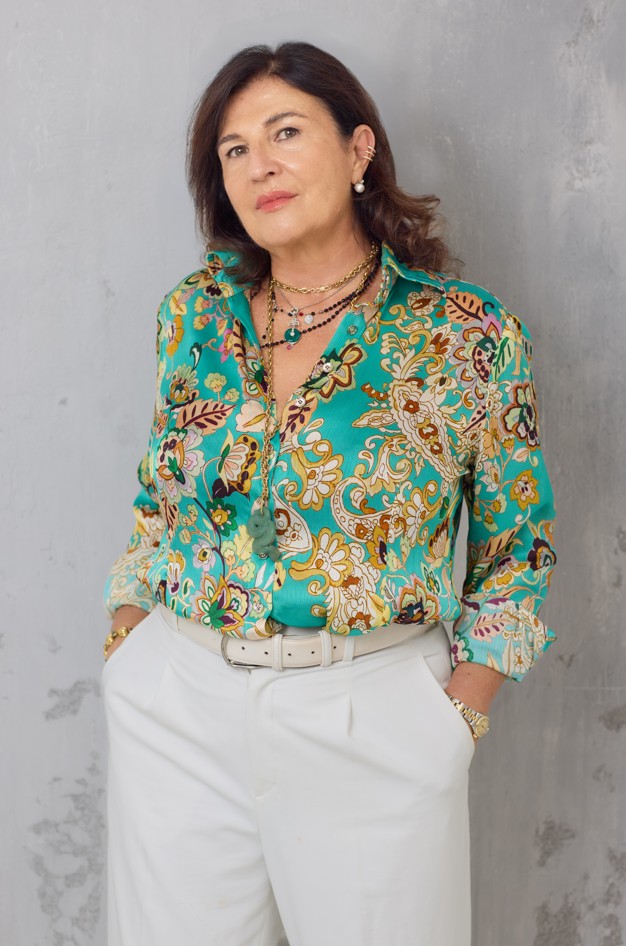
THE AUTHOR – Roberta Schira was born in Crema and lives between Milan and the Ponente Riviera, her “thinking neighborhood,” as Thomas Bernhard would put it. She writes about the world of food “even before it became a trend.” She becomes a writer, journalist, and food critic after earning a degree in Letters with a psychology focus. Since 2010 she has written for the Corriere della Sera on trends and protagonists of the “food sphere,” and she also devised the method that today forms the basis of the discipline, known as the “Schira canon,” and since 2016 she teaches it in a master’s program.
Three husbands, two children, and fifteen books, a cook by passion, she loves cats, champagne, the novels of Camus and Romain Gary, the garden in Liguria, theater, jazz music, swimming far out, long walks in cities and anywhere in the world. With Garzanti she published the novels The Flowers Are Always Right and Daisies Know How to Wait. And now she returns to bookshelves with Where the Bees Return.
The protagonist of the new novel, Esther, thirty, has everything one could wish for. At the helm of a real estate empire, she is independent, rich, desired. And yet she hides a small, curious secret: she keeps a box full of stolen buttons. Those tiny objects are the memory of the mistakes and losses she has not overcome: the father who left too early, the mother who never had a kind word for her, Marcello who showered her with attention but clipped her wings. After discovering a terrible truth that reopens old wounds, Esther takes refuge in a farmhouse in Valtellina. There, life moves slowly and nature shows how to bloom again with every spring. And thanks to a special encounter with a beekeeper, Esther discovers that bees do not teach: they do. And, watching them, something inside her begins to change. Almost without realizing it, she starts building the House of Bee Women, to care for other wounded women…