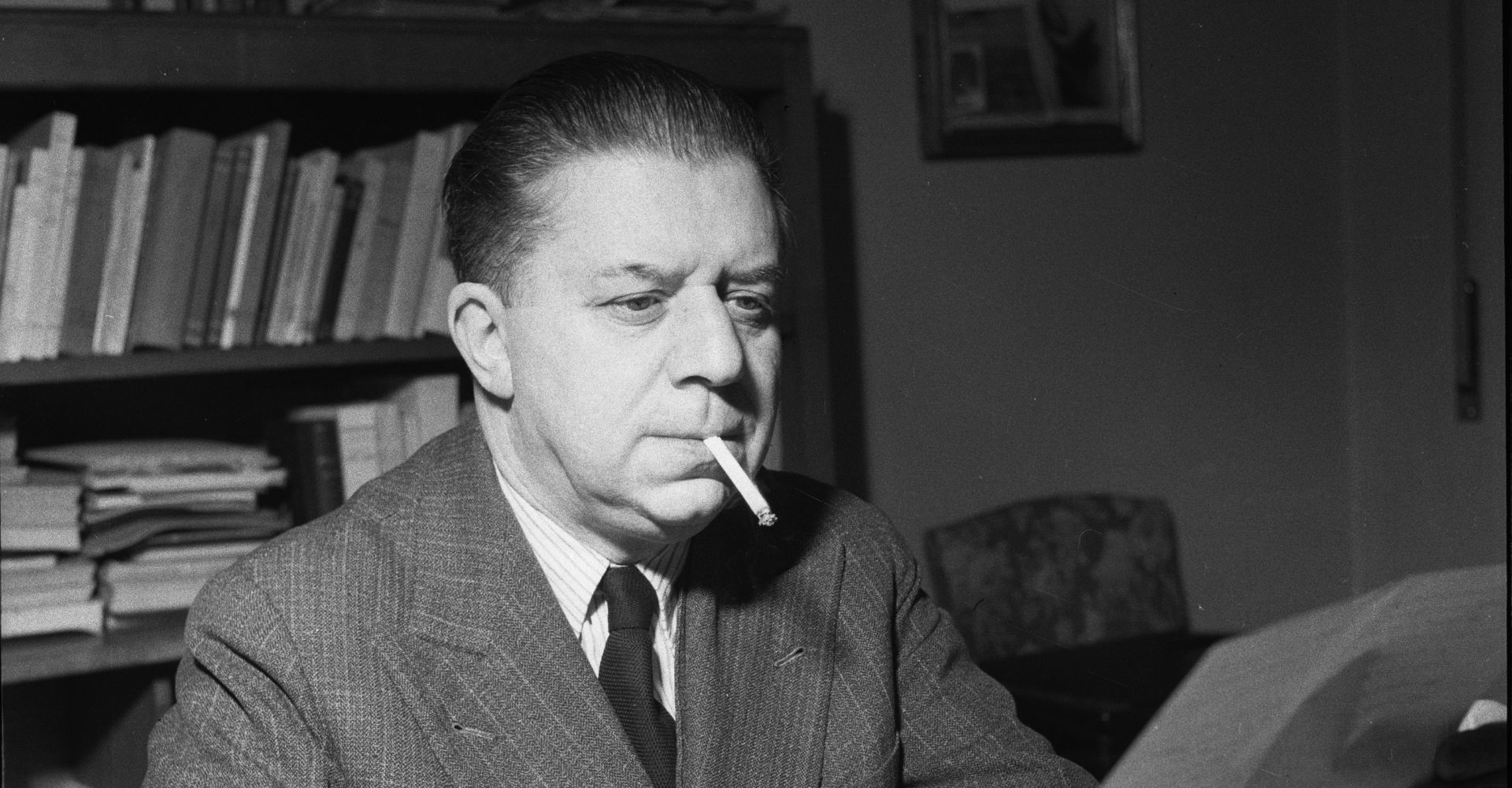
Recipient of the Nobel Prize in Literature in 1975, Eugenio Montale (born in Genoa on October 12, 1896, and who passed away in Milan on September 12, 1981; about whom we have spoken in more detail in this article) is perhaps one of the most complex Italian poets of the 20th century, yet at the same time one of the most cited by generations of readers.
His hybrid language, which blends lofty terms with everyday words, and technical terms and foreignisms with fragments of dialect, actually stands out as a unique creature, at times hard to penetrate, and moreover characterized by an anti-realist approach to traditional meter.
SCOPRI LA SEZIONE “CITAZIONI” DEL NOSTRO SITO
Yet the crisis of modernity described in his verses, his critique of social conformism and of the condition of intellectuals of his time, combined with evocative depictions of his Ligurian landscape and with a belief in a loving feeling that can illuminate even the darkest moments of personal and collective history, have made him an extraordinarily esteemed figure not only by critics but also by a broad, cross-generational public.
It is no accident that even today we are able to identify with a transportive immediacy in the atmosphere produced by his poems and to recall many of his lines by heart.
Which ones? Well: we have tried to gather below some of the most significant ones, focusing on the quotations of Eugenio Montale that have most insinuated themselves into the collective imagination (and that help us better frame his poetic method and his gaze on the world)…
Quotes by Eugenio Montale, among the most beautiful lines of his poetry
We begin with one of the most famous lines known to anyone who has encountered his poetry, even if only in school. As is often the case with his pieces, it is the title and at the same time the opening line of a text (found in the collection Ossi di seppia, published by Mondadori in 1925). An evocative hendecasyllable with a Baudelairean echo, which is followed by a renowned triad of objective correlatives:
Often I have met the illness of living…

This condition of aridity and inner solitude often appears as a leitmotif in the Genoese author’s output, and it emerges especially clearly in some of Montale’s quotations from later decades. One of them certainly is the line that opens a Mottetto from 1937 included in the collection Le occasioni (published by Einaudi and Mondadori), tied to the theme of loss and the inexorable passage of time:
Do not sever, scissors, from that face; let it belong to memory that drifts away, and do not make of its grand visage the fog that always surrounds me. […]
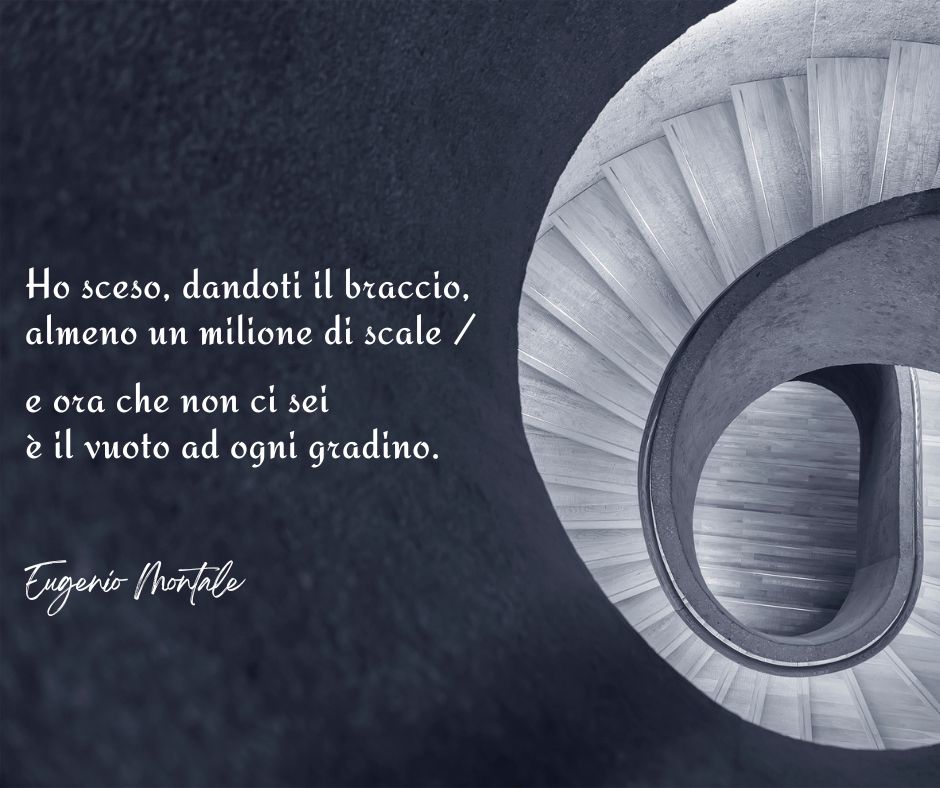
The verses we have just read are dedicated to the beloved Clizia (the American literary critic Irma Brandeis), but they are not the only lines Montale composed for a woman dear to him, far from it. One of the most moving cases likely dates to 1967, the year he writes about the loss of his wife Drusilla Tanzi in a poem from the collection Satura (Mondadori), which opens with the unforgettable distich:
I have descended, guiding your arm, at least a million stairs
and now that you are gone, emptiness greets every step.
The text goes on by developing a play of parts whereby, despite his eye illness, it is his wife who is the only one truly able to see— while the poet can perceive reality as it is only during some brief glimpses of awareness, which nevertheless tends to shed light on the uncomfortable truths of existence. We sense this from another of Montale’s most famous quotes taken from the already mentioned Ossi di seppia:
Perhaps one morning, walking in a glassy, dry air, turning toward it, I will witness the miracle: the nothing behind my back, the emptiness behind me, with a terror of a drunkard.
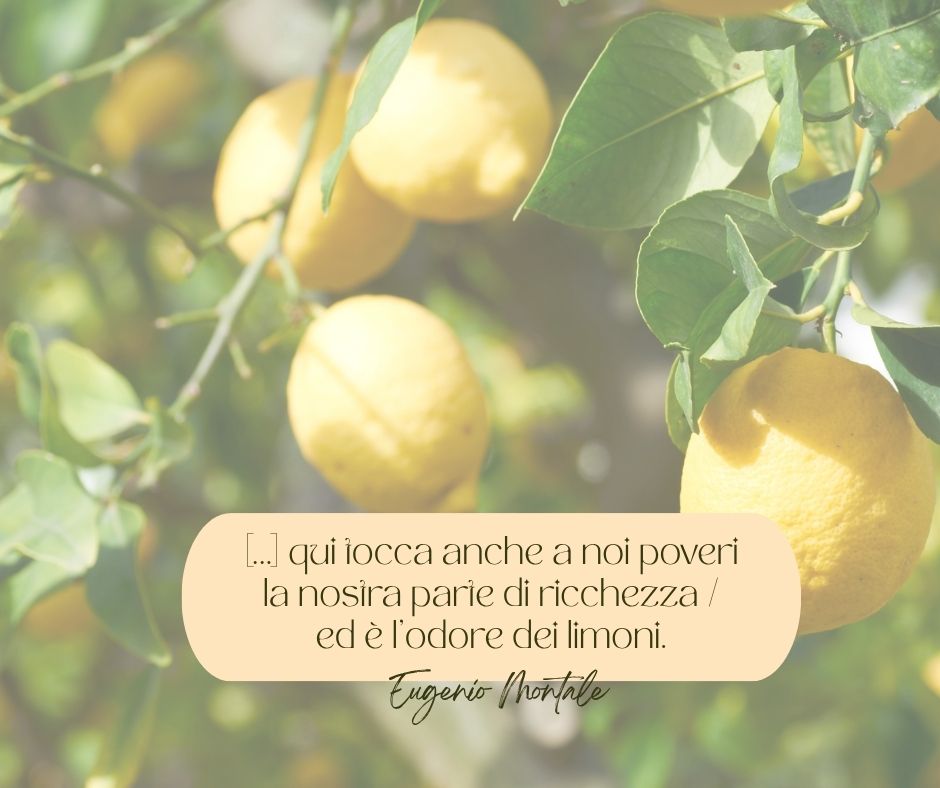
How, then, to give meaning to life, despite the restless search for happiness that most often appears illusory, fleeting, or at least ephemeral? Perhaps, according to one of Montale’s most emblematic lines, found in the poem I limoni (The Lemons) from 1921–1922, by staying in contact with the almost matter-of-fact beauty— and thus authentic— of what nature offers us every day…
[…] Here, the lively passions fall silent by miracle,
here even us poor folk share in our portion of wealth
and it is the scent of lemons.