

With its dreary days, its contrasting chromatic tones, and the first chill that accompanies it, autumn is a season that does not leave anyone unmoved; it is rich in melancholy and at the same time carries a vitality that flows into the fateful return to routine after the summer break, when one is ready to face a new year of commitments and above all of reading.
DISCOVER THE QUOTES SECTION OF OUR SITE
It is therefore not surprising that, since ancient times, many intellectuals from all over the world have devoted thoughts to autumn, putting in black and white reflections and insights with a timeless charm, which still today are able to capture in a few lines the multifaceted essence of this period of the year.
We have therefore gathered here below some of the most beautiful autumn quotes drawn directly from literature, from writers such as Hermann Hesse and Ernest Hemingway, up to George Sand, Giuseppe Ungaretti, Anna Akhmatova and Guillaume Apollinaire…
Some of the most beautiful autumn quotes drawn from literature
Let us begin with one of the most famous autumn quotes in Italian literature, which opens the poem The Shepherds written by the leading figure of our country’s decadence, Gabriele D’Annunzio (1863-1938), and included in the collection Alcyone (which was published among others by Garzanti, in an edition edited by Pietro Gibellini and Maria Belponer):
September, let us go. It is time to migrate.
Now in the land of Abruzzi my shepherds
leave the stables and head toward the sea:
they descend to the wild Adriatic
which is green as the pastures of the mountains.

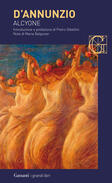
Alcyone
A description that manages to evoke soft atmospheres and, in a sense, ancestral, and thus seems in line with one of the autumn quotes left to us by George Sand (1804-1876), the French writer and playwright, who gives autumn a timely precise definition in the novel François le Champi (Feltrinelli, translated by Cinzia Bigliosi):
Autumn is a graceful and melancholic Andante that wonderfully prepares the solemn Adagio of winter.
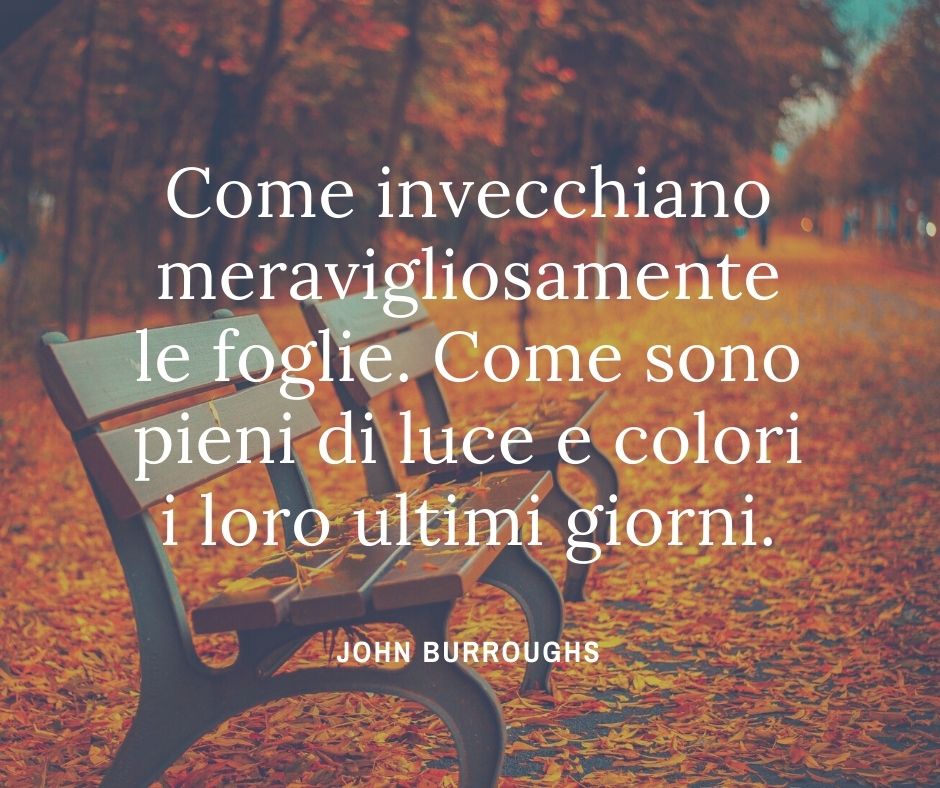
John Burroughs (1837-1921), thinker and walker who is still considered today among the most celebrated figures of nature writing, that is, the reflection on the beauty of the natural world, in his The Gospel of Nature (La vita felice, translated by Luca Castelletti), notes with his sensibility, about how the world appears in the last months of the year:
How wonderfully the leaves age. How full of light and color their last days are.
Indeed, the leaves themselves seem among the undisputed protagonists of the autumn atmosphere, as shown by another autumn quote drawn from great literature – this time signed by Hermann Hesse (1877-1962), the Swiss-German writer and poet who in the novel Demian (Mondadori, translated by Ervino Pocar) writes the following:
Thus the fronds fall around the tree in autumn: the tree knows nothing of it, the rain wets it, or the sun or the frost strikes it, life withdraws slowly into a small, intimate space. It does not die. It waits.
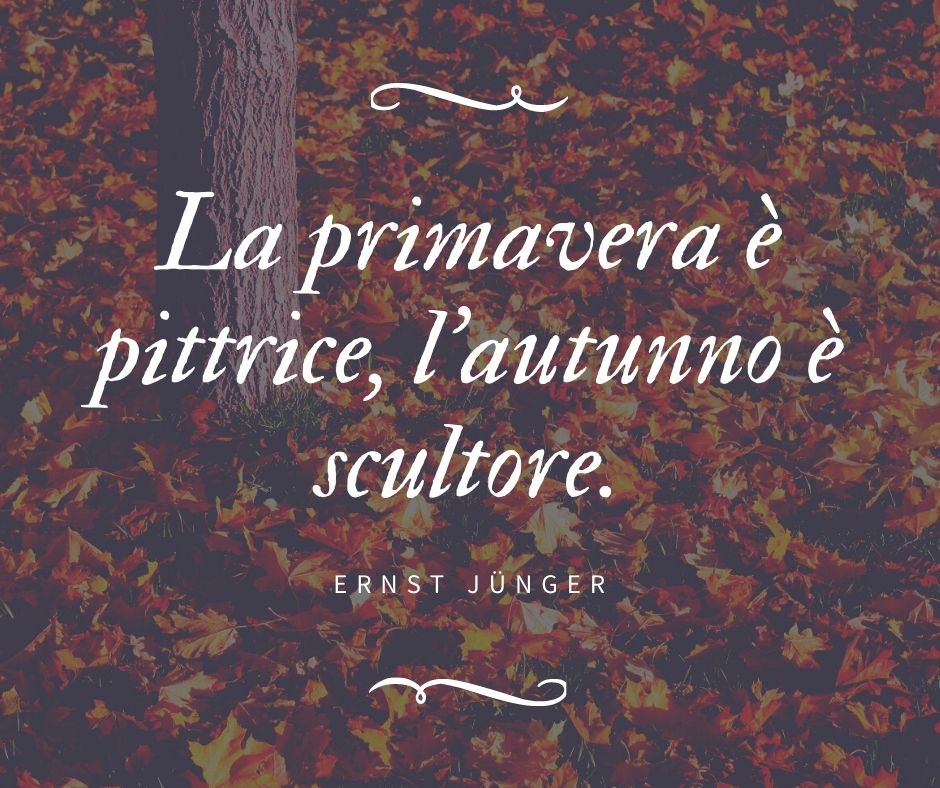
On the same track is another German author, Ernst Jünger (1895-1998), whose essay Das spanische Mondhorn (translatable into Italian as Lo scarabeo spagnolo) contains a fragilely delicate autumn quote, comparing this season to another especially loved in many cultures around the world:
In autumn the forms acquire a plastic maturity – spring is painter, autumn is sculptor.
Not only the leaves, however, but also the scents of autumn manage to capture the attention of writers. Just as it happened in its time with Ernest Hemingway (1899-1961), to whom in For Whom the Bell Tolls (Mondadori, translated by Maria Napolitano Martone) we owe some of the most quoted autumn phrases in American literature:
This is the smell I like. This is the freshly cut clover, the crushed sage as one rides behind a herd, the smoke of wood and leaves burning in autumn. It is the smell of nostalgia, the smell of the smoke from piles of leaves burning autumn in the streets of Missoula.
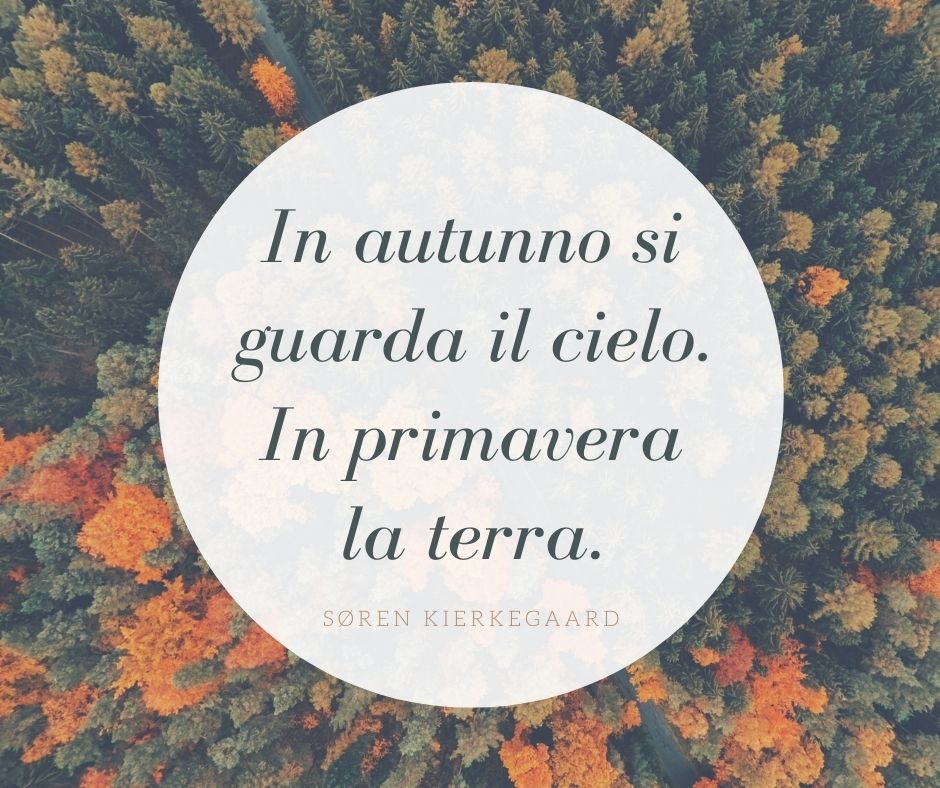
We stay on the same wavelength of sensory perceptions with Søren Kierkegaard (1813-1855), the great thinker from Copenhagen, who on October 29, 1837 notes in his Diary (BUR, translated by Cornelio Fabro) one of the autumn quotes that best condense the tendency of some of us toward introspection and spirituality, especially in a period that lends itself so well to admiring everything around us:
For this reason I much prefer autumn to spring, because in autumn one looks at the sky. In spring, one looks at the earth.
This inevitable desire to capture what happens around us during autumn then has numerous facets, which clearly end up influencing not only our thoughts but also our moods. It reminds us of Thomas Wolfe (1900-1938) in The River and the Time (Mondadori, translated by Cesare Vivante), where he states:
All things on earth head toward home, during dear old October; sailors toward the sea, travelers toward walls and fences, hunters toward fields, the hollows, the long cry of dogs, the lover toward the love he had abandoned.
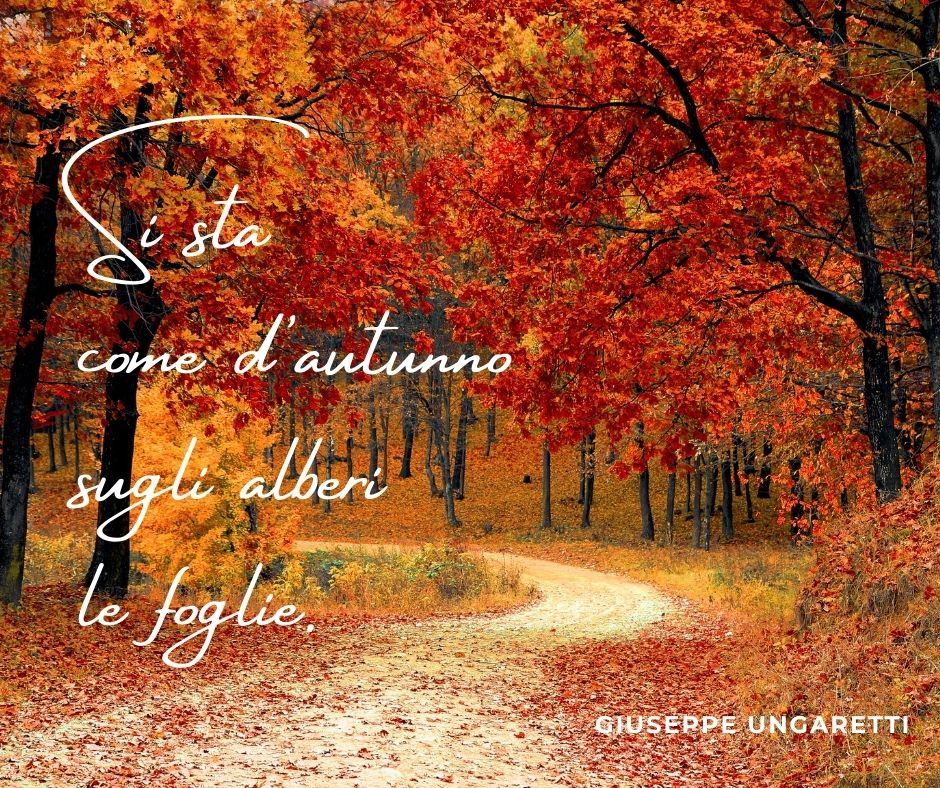
It is no coincidence that the same Giuseppe Ungaretti (1888-1970) compared in Soldiers (Vita di un uomo, Mondadori) the condition of the leaves to the fragile and restless state of soldiers in the trenches, sealing in a few verses the deep and indissoluble bond that can arise between autumn and the human condition:
It stands
like autumn
on the trees
the leaves.
If autumn is often associated with the fragility of life and with nostalgia for time passing, on the other hand there have been authors who — as we have already seen — have not failed to direct a wonder and contemplation toward this season, just as Guillaume Apollinaire (1880-1918) does in the lyric Autumn Sick (Poesie, Rizzoli, translated by Giorgio Caproni):
[…] And how I love the season, how I love your sounds
The fruits that fall and no one picks
The wind and the forest that weep
All their autumn tears leaf by leaf
The leaves
Trampled
A train
That passes
Life
That goes.
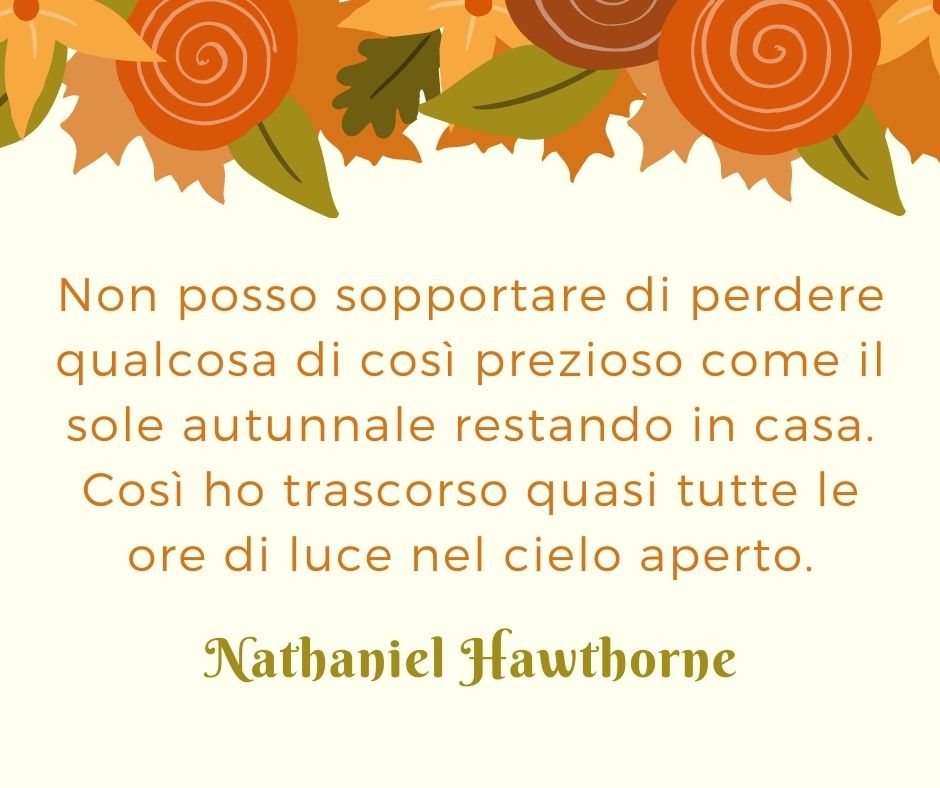
Nathaniel Hawthorne (1804-1864) is also of this mind; on October 10, 1842, in his American Notebooks (a volume collecting notes from 1835 to 1853, just before his departure for England, plus some letters from the same period), he notes the following autumn quote:
I cannot bear to miss something so precious as autumn sunshine by staying indoors. So I have spent almost all the daylight hours in the open sky.
Even better, then, when we have the possibility to share an evocative season with someone dear to us: every sense is exalted and crystallized in memory, precisely as the Russian poetess Anna Akhmatova (1889-1966) does in this poem contained in the collection The Course of Time (Einaudi, translation by M. Colucci):
I remember only an autumn garden, tender, transparent,
and the cries of cranes and the fields dim…
Oh, how delicious the earth was with you!
And we conclude now with a delicate and definitive autumn quote, attributed to the English writer Samuel Butler (1835-1902) and part of the work So dies the flesh (Einaudi, translated by Enzo Giachino), published posthumously in 1903. A reminder of the idea that each season (and our lives) brings with it a different yet equally important richness:
Autumn is the sweetest season, and what we lose in flowers we gain in fruits.

Amelia Hartwell
I write about books the way I read them: slowly, curiously, and with attention to the details that linger after the final page. At Lythrum Press, I cover literary fiction, essays, memoirs and the wider culture of reading, with a particular interest in voices that challenge familiar ways of seeing the world. My work is guided by one simple idea: a good book deserves more than a reaction — it deserves a conversation.