On the desk of Kader Abdolah, in Delft, the Netherlands, beside a stack of volumes devoted to the Persian mythological tradition, there rests a collection of poetry by . What unites the Iranian writer – born in Arak in 1954 and a political refugee in the Netherlands since 1988 – and the American poet is their shared fascination with a central figure in the birth and development of Western monotheistic religions: Zarathustra.
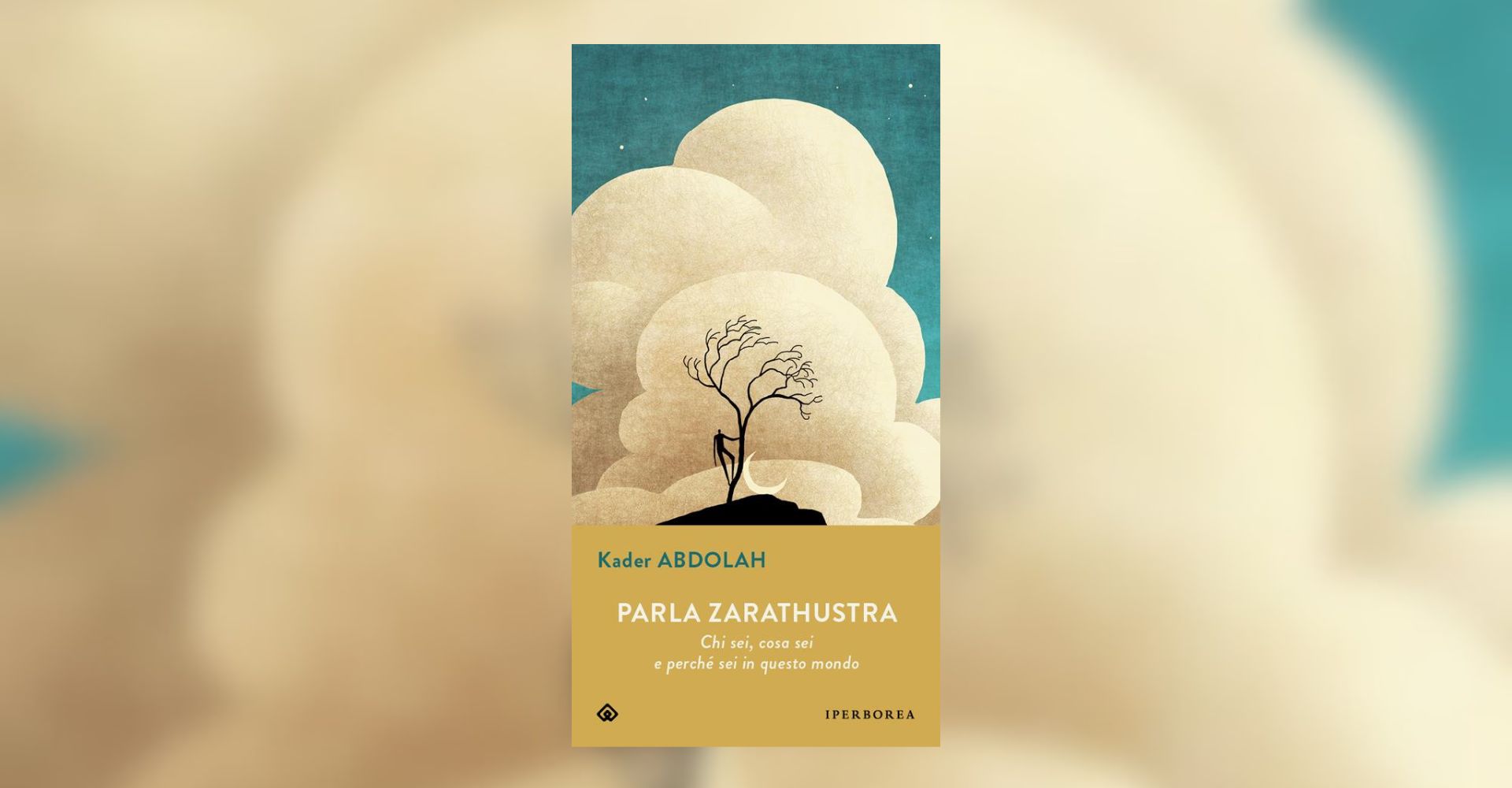
For the mythical founder of Zoroastrianism, and for the long journey undertaken to reconstruct his life and thought, Kader Abdolah dedicates the novel Parla Zarathustra. Published in the Netherlands in 2024, the book reaches Italian bookstores thanks to the publisher Iperborea, in the translation by Claudia Cozzi and Elisabetta Svaluto Moreolo.

Kader Abdolah, a Mediator Between Two Cultures
Following novels such as The Messenger (Iperborea, 2010) and What You Seek Is Seeking You (Iperborea, 2025), about the exile poet Rumi, the writer confirms himself as an expert and passionate mediator between two cultures. He proudly defines himself as the one who carries into the Dutch language the cultural heritage of the ancient Eastern civilizations.
But Zarathustra is not merely a philosophical-literary figure for Abdolah: “He is part of my identity as a Persian man, as a Persian writer,” he says, and adds: “He is present in my thoughts and in my pen.” Tackling this search in Dutch, which is not his mother tongue, has allowed him to understand that the prophet belongs not to the cultural patrimony of Persia alone, but to all of humanity.
The West has Always Asked Questions About Zarathustra
From Pliny the Elder, through Plutarch, to Nietzsche, the entire West has pondered Zarathustra. According to the hypothesis shared by most linguists, the prophet would have lived roughly around 1500 BCE, but, as with the long-standing Homeric question, some scholars speculate that he may never have existed and that the Gathas – the religious hymns traditionally attributed to him – are in fact the product of an ancient oral tradition later written down.
The First Thinker to Identify the Universe’s Principle
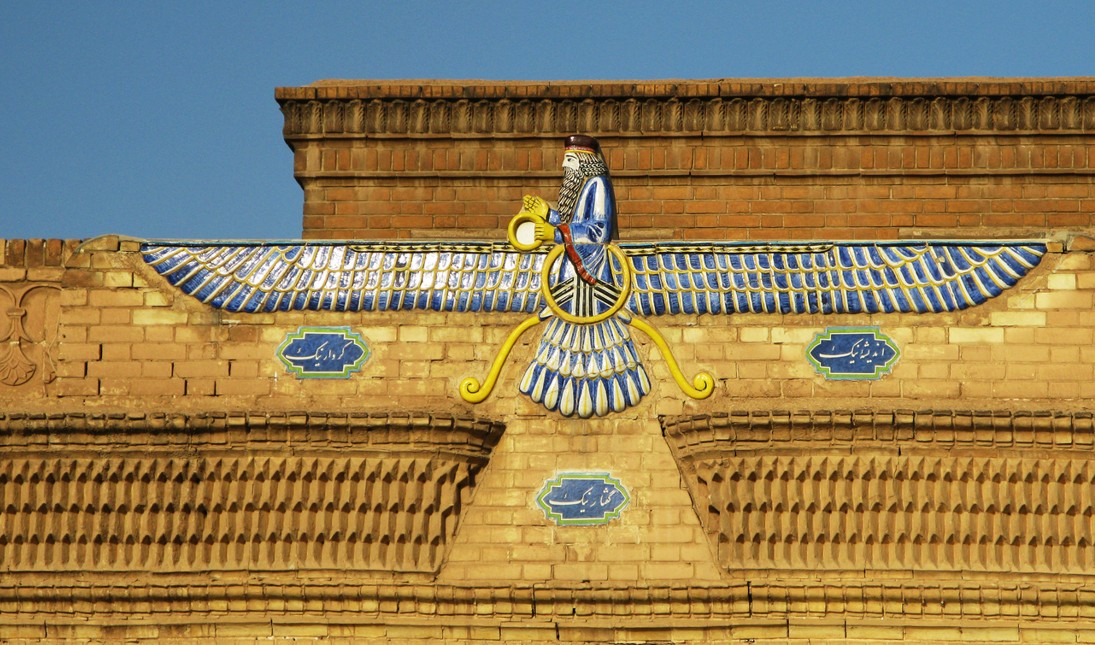
In any case, from those sacred lyric compositions later gathered into the Avesta, Zarathustra emerges as the first thinker to identify the principle of the universe in the eternal conflict between good and evil. Son of Porushasb and Dughdava, he was the last descendant of Kayumars, the first human being created by Ahura Mazda, the God of Good, and slain by his wicked brother Ahirman.
It was precisely Ahura Mazda who appointed the young priest as his messenger in the struggle against the tyrannical rule of the priestly caste. The priests were, in fact, guilty of deceiving the faithful, spreading superstition, fear, and unhappiness. Against these lies, Zarathustra rose up and raised his voice, proclaiming joy as a right for all living beings.
Today’s Generations Sink Their Roots into Antiquity
To love and celebrate life: this is the prophet’s essential and revolutionary lesson: “Writing about Zarathustra, I wanted to show younger generations that they are not merely young, but that their roots are deeply anchored in antiquity.”
Aware that human beings never stop telling stories and that myths travel through History, migrating from one culture to another and giving birth to new stories, Abdolah follows in the footsteps of the ancient inhabitants of the Eurasian steppe.
United by a common Indo-European language, the steppe tribes did not merely develop the most revolutionary innovations of their time, such as the invention of the wheel, but also crafted a large portion of the narratives that still form the roots of our cultural heritage.
The Experience of Forced Migration
“Milk,” “butter” and “cow” were the most important words for these communities that, after twenty thousand years, left the steppe and emigrated: some toward Europe, others toward Iran and India. Among the many reasons that led to emigration, Abdolah also includes the human desire to move to discover new worlds. A desire that, for the writer, presented itself in the form of forced migration.
Persecuted by the Shah’s regime and later by the ayatollah Khomeini, Abdolah recalls exile as one of the most meaningful experiences of his life: “Suddenly I found myself in a place from which to look back at the past, toward myself and the thirty years I had lived until then.”
Yet it was not a path free of difficulties: “I was a man with no money, no home, and no hope.” When he lived with his wife in Ankara, he recalls, he would never have imagined continuing his career as a writer, nor changing languages: “Yet here we are. I have written more than thirty books and my writing style has changed.”
The Land as Archivist and Champion of Language
To reconstruct the prophet’s history, the author often refers to cuneiform inscriptions reported on clay and stone tablets, jars and other artifacts found in the ruins of ancient cities: “The land as the fairest archivist, as the champion of language,” the author observes in the text.
What happens, though, when war destroys this archaeological and cultural heritage? Consider the more than one hundred historical-cultural sites destroyed since 2023 in Gaza, or the devastations that have struck Iran itself. Faced with the loss of documentary sources and the certainty that it is futile to seek what has disappeared, Abdolah relies on the freedom inherent in writing.
“As a writer and a human being, I have the full right to understand and probe myself: who am I?” And, as always, he underscores the fortune of writing and loving one’s craft: “Because, as Zarathustra teaches, the meaning of life is to enjoy it.”
A Quest Concerning All Humanity
Halfway through the journey, Abdolah realized that his search concerned not only Zarathustra but humanity itself. Through the philosophy of Zoroastrianism, practiced by today’s Parsi communities across Iran, Azerbaijan and India, and summarized in the motto “good thoughts, good words, good deeds,” it points to the “right path.”
A path founded on justice and non-violence, not only toward humans, but toward all living beings. A path rooted in respect for the environment, for the boundaries of territory, and for the happiness of individuals.
THE APPOINTMENT IN ITALY WITH THE AUTHOR – On Saturday, September 19, at 7 p.m., Kader Abdolah will discuss his book with Ilaria Sotis on the occasion of the 2026 edition of the festival Pordenonelegge (Dissensio Arena).