I want to start from theelsewhere, from places that barely exist, so confined and closed that it would be easier to deem them impossible: Raglio, with an onomatopoeic name that doesn’t help much, the surrounding mountains to trap it, distant Brescia and the faraway Switzerland (for how much closer it may seem).
A Place That Dissolves
An excellent place to die and to hide, a spot to send the priest from Casa d’altri by D’Arzo to talk with people tempted to end it all. A place that dissolves, which has its own perfect internal entropy: a place where things happen without anyone elsewhere knowing.
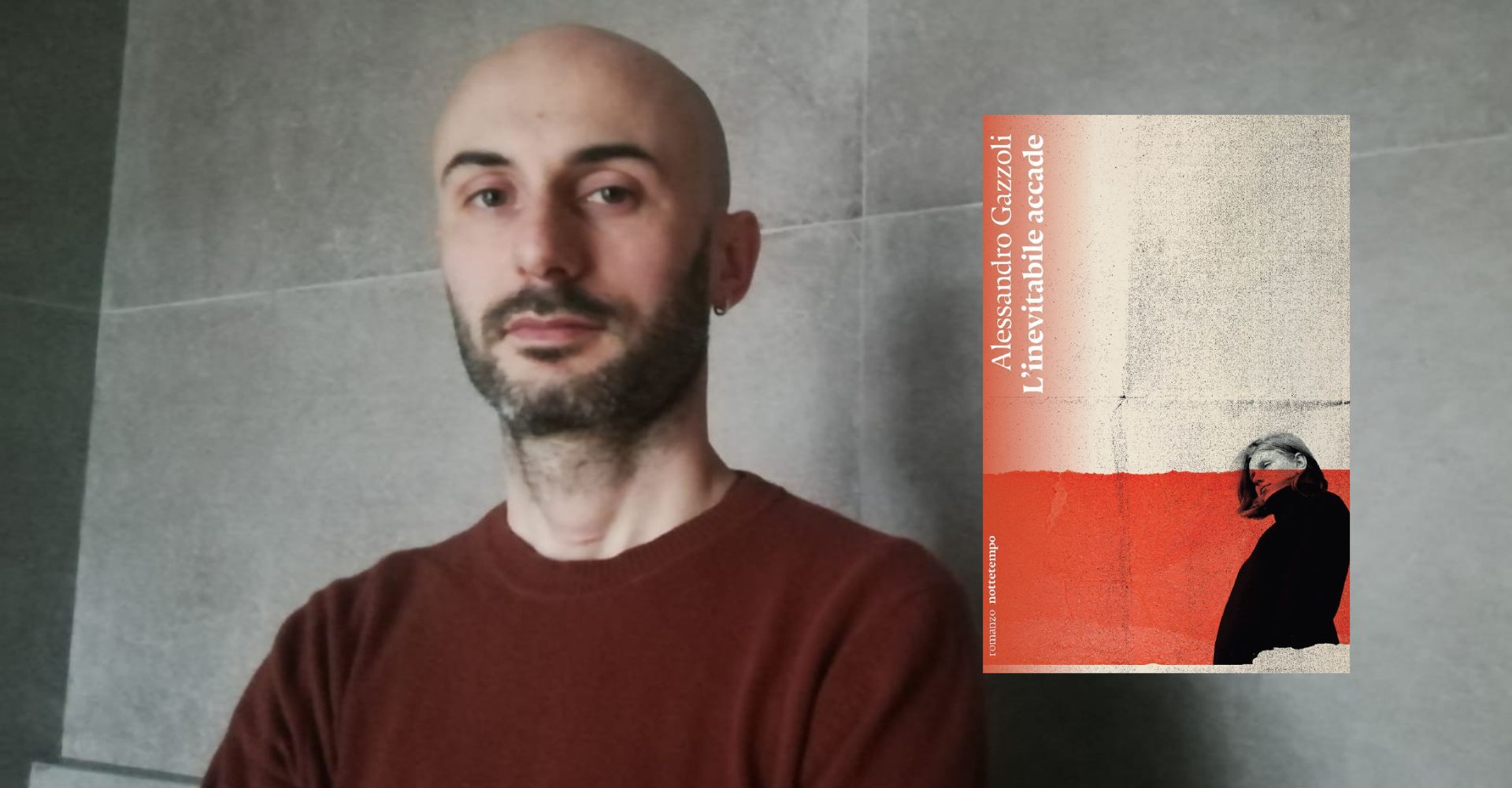
Eccoci dunque con la storia di Arianna, purissima sin dal nome, costretta a districarsi; eccoci con Gazzoli che insegue uno di quei fatti che di solito restano tranquillamente incantanti nelle foto di famiglia senza possibilità di rivelarsi altrimenti. Peccato che qui ci sia del rosso e che a quel rosso si aggiungano le brigate, peccato che la microstoria familiare tocchi quella nazionale che nei Settanta non poche fibrillazioni ha creato: in L’inevitabile accade (nottetempo) nelle questioni particolari, minime e apparentemente di paese c’è traccia (e sangue) di quelle mastodontiche, di quelle che hanno fatto temere e tremare.
Being Powerful, but Never Known Elsewhere
A hammering in Gazzoli’s head, always turned backward, always caught in the past: the grandmother’s stüa, an impregnable living room, which becomes a place to decipher, a basement where you find the things that do not hold. Arianna, then, and one of the Karamazovs, the one in the vistìt del laurà— the shirt of work — not to be taken off even on the day you marry, the one who did not follow the family protocol: the beloved woman, not the one related to the previous one. And then to be powerful, but never known elsewhere, because the fame of the place, very much like that of an epic with a hundred mouths and wings, counts far more than that noise intended to lure only those who should neither hear nor know.
Thus the flesh becomes blood, blood made of chronicle: legs struck, kidnappings, fears and that cauldron of reflections, regarding a fact from nearly fifty years ago, still hot and still to be whispered among fears of exaltation and fear of betrayals. And so while Raglio changes and forgets its rural roots, it sees the first camions and splits in half to keep old and new; it becomes a trapdoor, a hidden place, where one tries to live the life the protagonist attempts while there are things from the past, things not so easy to explain, always ready to ring the doorbell and ask for accountability from someone. Things not to be forgotten, but certainly to be avoided, seeking that dissolution that only the omertà of the province (the real one, not the postcard-like one flaunted in tragically Instagrammified tales) can guarantee, amid thorns and suffocations.
Eccomi dunque, I had gotten lost in the town, but I fear someday you might want to get lost, in life or in death, the same Gazzoli, who meanwhile has slipped into the secret rooms, rooms so inaccessible that they seem within reach, to settle accounts with himself, with his damned ghosts, and with those matters that if you start to tell them may wish to be told to the very end, because history, that of books, is black, red, or many colors, but the history of individuals always shares: it is colored by the color of blood.
THE AUTHOR – Graziano Gala was born in Tricase, in the province of Lecce. He lives and works as a professor in the province of Milan. He debuted with minimum fax with the novel Blood of Judas (2021), with which in 2024 he published Popoff. In 2023 he published for Tetra the novella Ciabatteria Maffei and he curated, for Baldini e Castoldi, the Counter-Dictionary of the Italian Language.